
Managing project deadlines, budgets, and client expectations is part of daily life at an agency. Left unchecked, small asks and last-minute changes quietly add up. That’s why learning how to stop scope creep early keeps profit margins healthy and client relationships strong. In this guide you’ll get practical steps, contract language examples, client communication scripts, and a repeatable change-control workflow you can use on the next project.
Handling Scope Creep in Agency Projects is about more than saying no, it’s about structured conversations, predictable pricing, and a clear escalation path so your team can deliver great work without surprise overruns.

Why scope creep happens
Scope creep, also called requirements creep or project creep, usually starts with good intentions. A client asks for a small change, you agree to keep momentum, and suddenly the project takes on extra features, review cycles, or platform integrations. Common causes:
- Ambiguous or verbal requirements at project start
- No formal change request process
- Weak contract language or missing milestones
- Internal pressure to keep the client happy
- Misaligned stakeholder expectations
Understanding these root causes makes prevention practical instead of punitive.
Quick wins to stop creep before it starts
1. Lock the brief and confirm outcomes
At kickoff, capture deliverables, acceptance criteria, milestones, and what’s out of scope. Use a simple one-page project brief the client signs off on. That removes ambiguity and sets a baseline for change requests.
2. Build change-control into every proposal
Include a short Change Request Process section in proposals and SOWs. State how changes are logged, how impact is estimated, and how approvals affect timeline and fees. Keep the language plain and client-friendly.
3. Break work into timeboxed sprints
Use fixed-length sprints or phases. If something arrives mid-sprint, it goes into the next sprint or becomes a paid add-on. Timeboxing creates natural checkpoints for scope review.
4. Use a visible scope tracker
Use a collaborative document or a lightweight project board with a column for "Requested Changes". Make the tracker available to the client. Transparency reduces surprise and helps prioritize together.
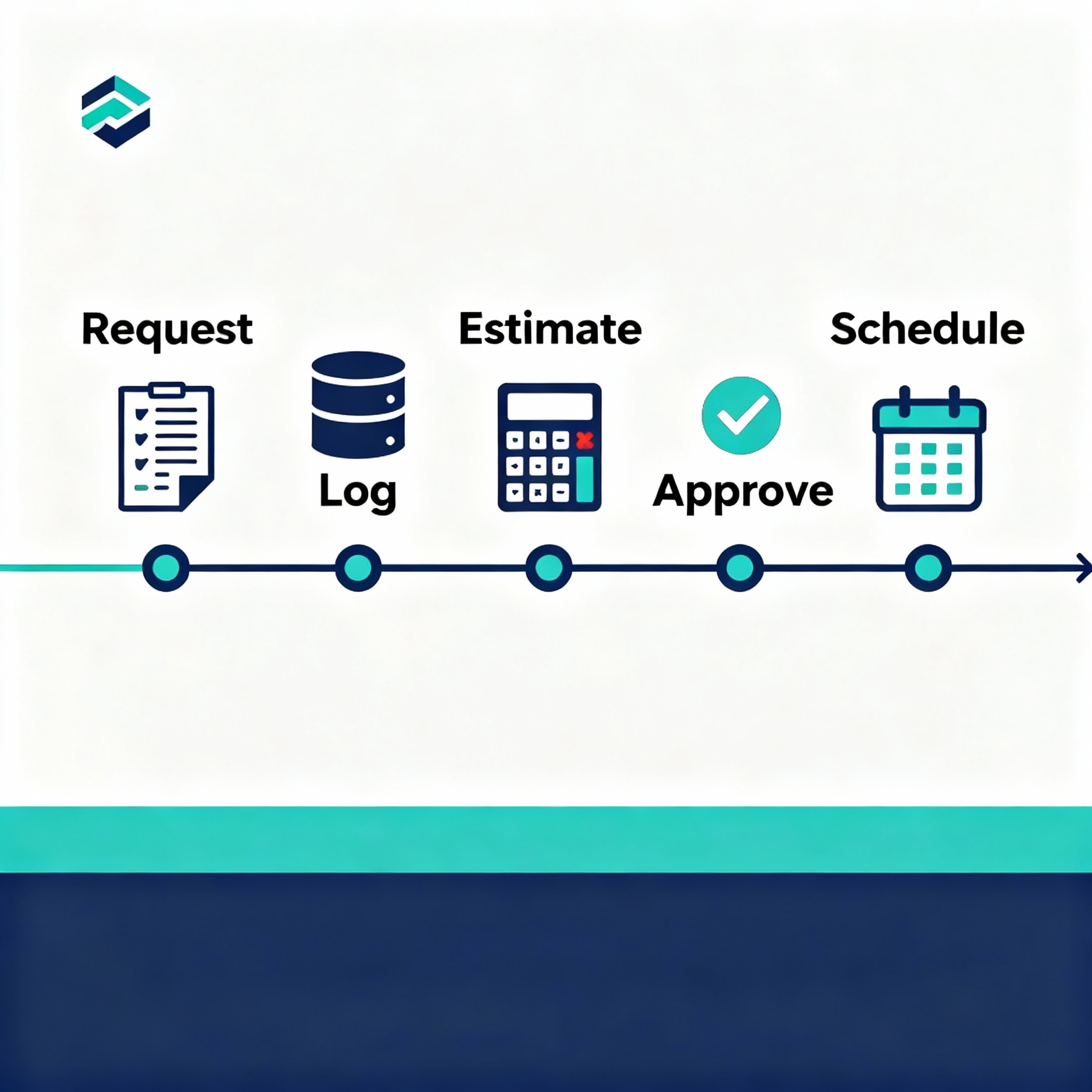
A simple change request workflow you can implement today
- Client requests change via project email or ticket
- Project manager logs the request and confirms receipt within 24 hours
- PM estimates impact on time and budget within 48–72 hours
- Client approves estimate and signs a change order or pays a milestone
- Team schedules the work into the next sprint and updates timeline
This process protects your schedule and creates predictable cash flow.
Contract language you should include (short examples)
- "Deliverables and scope are defined in Appendix A. Any change to scope will be documented and billed via a Change Order."
- "Requests received after kickoff will be estimated and billed at the agreed hourly or fixed-rate pricing. Work will be scheduled after client approval."
- "Client approval of a Change Order is required before any additional work begins. Timeline adjustments will reflect the approved changes."
Keep clauses short, clear, and visible. Avoid legalese that confuses clients.
Pricing strategies to deter casual changes
- Fixed-price for a well-defined scope, plus a daily/hourly rate for change requests
- Retainer or block-hour bundles with a clear overage rate
- Feature-based pricing, where additional features are quoted as separate line items
Pricing should make it easy for clients to say yes to necessary changes while discouraging scope creep.
Managing conversations with clients (phrases that work)
- "That’s a great idea. To do that well we’ll need X additional hours, which changes the timeline by Y days. Shall I prepare a change order?"
- "We can include that in the next phase. If you need it now, here’s the estimated cost and timing."
- "Right now we’re aligned on these deliverables. Adding this request will shift resources from X to Y. Would you like to reprioritize?"
Framing requests as choices keeps clients feeling in control while protecting your delivery.
Tools and templates to standardize control
- Lightweight SOW template with explicit out-of-scope bullets
- Change order form with cost, timeline impact, and sign-off
- Shared scope tracker or Trello/Asana board for transparency
If you need a ready-to-use audit or lead capture for service pages, see how embedding an audit widget can help your sales process at Auditsky: https://auditsky.ai/demo. For pricing and packaging guidance, check the pricing page at https://auditsky.ai/pricing and the platform overview at https://auditsky.ai/how-it-works.
Handling internal pushback
Team members sometimes cave to scope creep under pressure. Build internal guardrails:
- Empower PMs to say no without asking for permission every time
- Offer an escalation path for client negotiations
- Track how much unpaid change work happens and review monthly
Seeing the numbers helps leaders make policy changes before profit margins shrink.
Measuring the impact of scope control
Track these KPIs monthly:
- Percentage of projects with approved change orders
- Average hours billed to change requests per project
- Revenue lost to unpaid scope changes
- Client satisfaction scores after change requests
These metrics turn scope control from a feel-based argument into data-driven decisions.
FAQs
What is scope creep, and why is it a problem for agencies?
Scope creep is uncontrolled changes to project deliverables after kickoff. It erodes margins, delays launches, and stresses teams if not managed.
How do I say no without damaging client relationships?
Say yes to the idea, then offer a clear path to execute it: estimate, impact, and a change order. Clients appreciate clarity and options.
Should we always charge for changes?
If changes are outside the original scope, yes. Charge or schedule them for the next phase. Give clients small, affordable options so they can proceed without friction.
What if a client refuses to sign a change order?
Pause work on the new item and continue agreed work. Explain the risks of proceeding without mutual agreement. If needed, escalate to a stakeholder meeting.
Can scope creep be prevented entirely?
Not entirely, but with clear briefs, contracts, a change-control workflow, and transparent pricing, you can reduce it dramatically.
Next steps for agencies
Adopt a one-page brief, add a short change-control clause to every SOW, and start tracking change requests in a shared board. Those three moves alone will reduce reactive firefighting and protect margins.
Grow your agency by design
If you want tools to capture leads while keeping scope conversations professional and data-led, explore how Auditsky helps agencies convert visitors into qualified leads and present clear audit findings to clients: https://auditsky.ai. Try the demo to see how an embedded audit can support your sales and pre-sales scope conversations.
In short, effective scope control is a mix of process, pricing, and communication. Put the guardrails in place and your team will deliver predictable outcomes that delight clients and protect your bottom line.