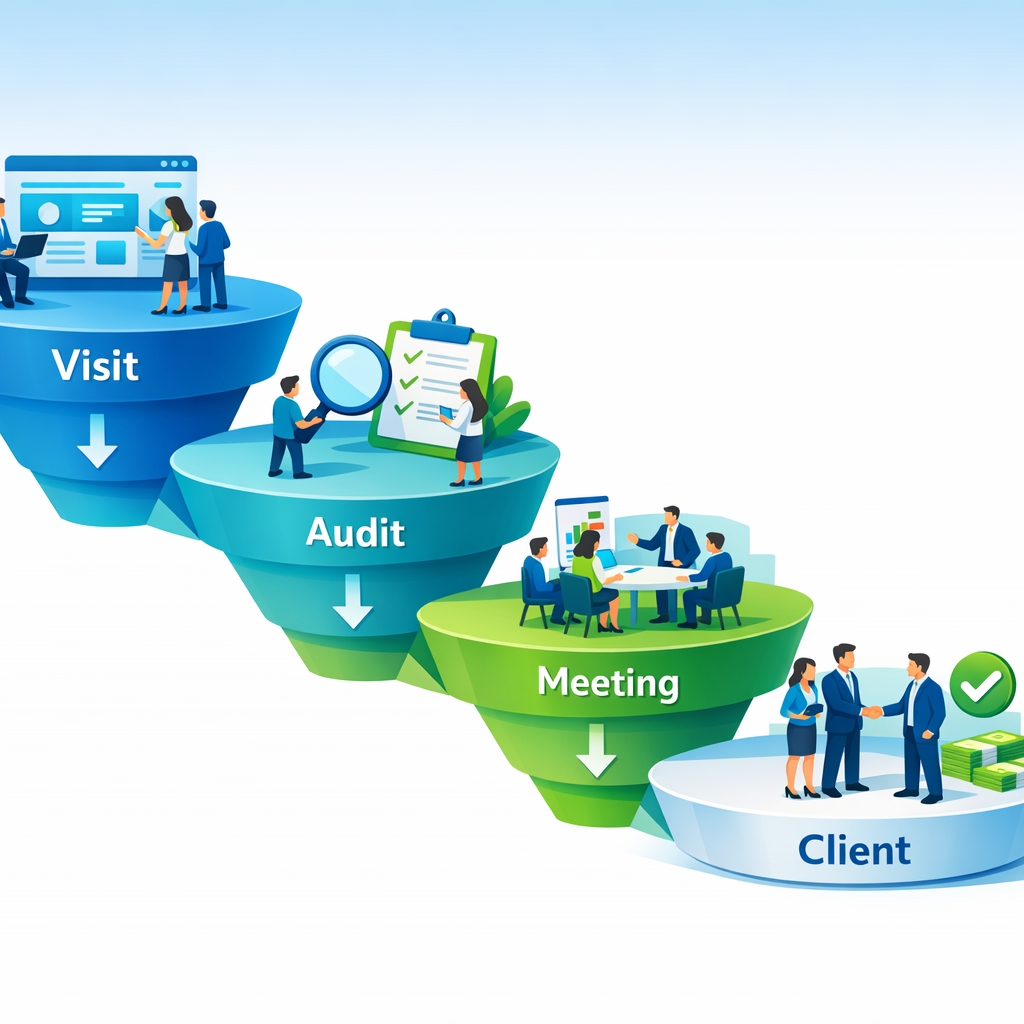

Every agency wants a predictable, scalable way to turn website visitors into real sales conversations. One of the most reliable tactics is to give prospects something useful in exchange for a small act of trust, and that is where website audits shine. They create instant value, surface quick wins, and start conversations that turn into proposals.
Here’s the thing, audits are not just checklists. When you use a well-designed audit strategically, it becomes a lead magnet, a sales tool, and a qualification filter all in one. Below I walk through how agencies use audits to get clients, the playbook you can copy, and the practical steps to make audits a repeatable client acquisition engine.
Why audits convert, fast
Audits are tangible, immediate and actionable. Visitors rarely trust abstract promises; they respond when you point out a clear problem and show how to fix it. A short, automated audit gives instant feedback on SEO, site speed, content clarity, and AI search visibility, which lowers friction and increases response rates.
Two quick facts that matter when you pitch this internally: many B2B sites convert in the low single digits, while a well-placed, value-first tool can multiply lead velocity. That gap is your opportunity. Use audit results to open consultative conversations instead of starting with a price quote.
The agency playbook: four high-impact audit tactics
1) Embed a white-labeled audit widget on high-intent pages
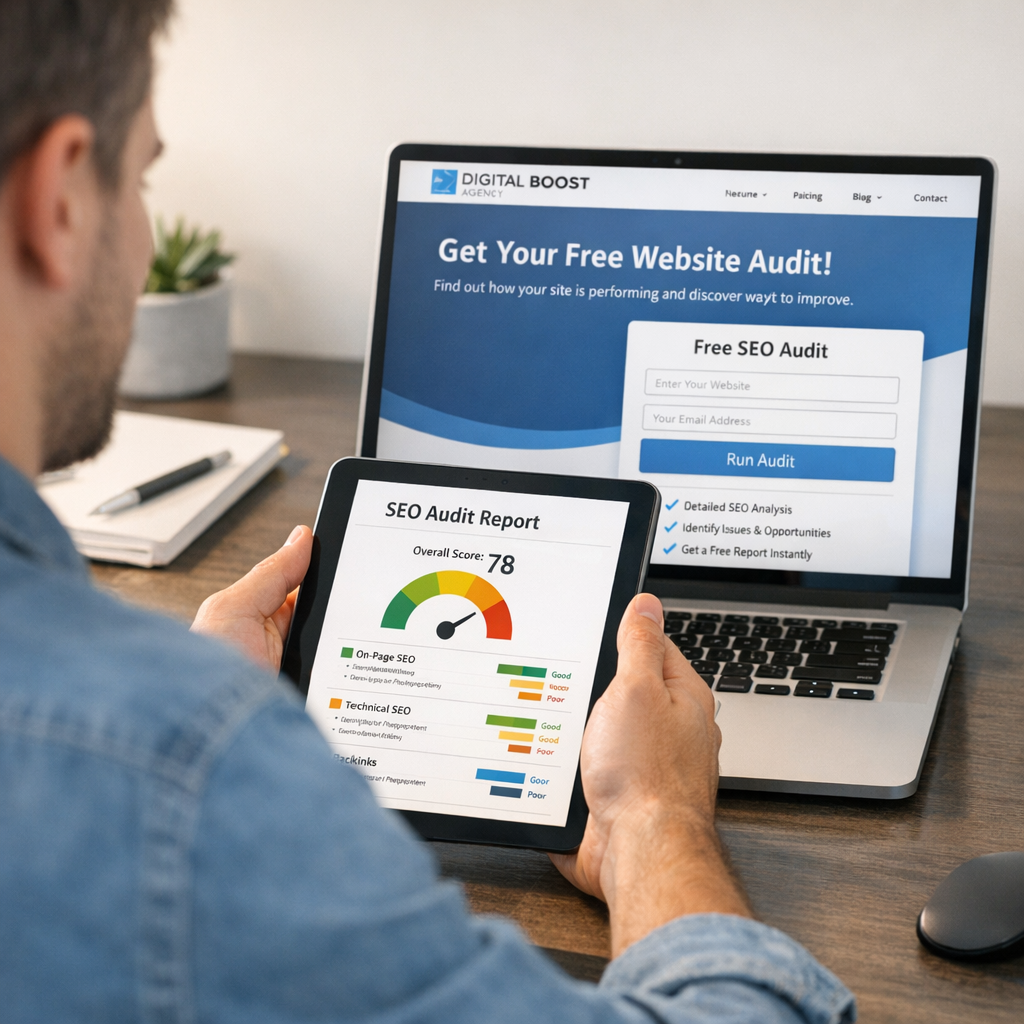
Put your audit where people already look for answers: service pages, pricing pages, and top-performing blog posts. A lightweight widget that runs an instant scan and asks for an email to send the full report captures the visitor at the moment they care most.
Tip: match the widget copy and visuals to the page intent. A home page hero needs a different prompt than a technical SEO blog post.
2) Use audits to qualify and educate leads
An audit report should include a clear score, 3 prioritized fixes, and business impact language. That format helps sales and delivery teams prioritize follow-up. Instead of asking, "Are you interested?" you can say, "Here are three fixes that are likely costing you X in lost leads. Want a 30-minute walkthrough to prioritize them?"
3) Convert audits into repeatable sales collateral
Save audit reports into templates you can reuse in proposals and discovery calls. A differentiated, visual audit helps you stand out in competitive pitches. You can also create packaged audit offers: a free mini-audit to gather leads, then a paid deep-dive that includes implementation options.
4) Follow up with a frictionless next step
Speed to lead matters. When someone requests their audit, automate an immediate email with the report and a single-button scheduling option. That lowers hesitation and increases booked meetings. If a visitor downloads an audit, route it to both sales and the account owner so outreach is personalized and timely.
Types of audits agencies run and how to use each
Technical SEO audits
Use these to show low-hanging technical fixes, like broken links, crawl issues, indexation gaps, and Core Web Vitals improvements. Technical items are concrete and often high ROI, which helps justify retainers or sprint projects.
Content and blog audits
Highlight content gaps, cannibalization, and pages that could rank for multiple high-intent queries. Content audits are excellent for agencies that want longer-term retainers tied to organic growth.
Conversion and UX audits
Show where visitors drop off, which forms underperform, and what messaging needs tightening. Conversion findings are easy to translate into project scopes for A/B testing, UX redesign, or CRO retainers.
AI visibility and ChatGPT-ready audits
As AI search grows, audits that check for schema, concise answers, and authoritative content become sales accelerants. These audits speak directly to companies worried about being invisible in AI-driven discovery.
Packaging audits as offers and lead magnets
- Free mini-audit on the site, gated by an email, then an automated follow-up with a short video walkthrough.
- Free audit + paid strategic call, where you present a 30-day action plan and optional implementation package.
- Audit-led workshops: run a 2-hour session for prospects using their audit results, then offer a sprint to implement priority items.
Each format has a role in the funnel: free audits build volume, paid audits qualify and deepen the relationship.
Metrics to track (and what good looks like)
- Audit widget conversion rate, page by page. Even small wins here compound quickly.
- Audit-to-meeting conversion, ideally tracked from the email CTA to a scheduled call. Faster follow-up improves conversion.
- Close rate for audit-sourced opportunities, to measure ROI of audit-driven outreach.
Benchmarks vary by industry, but many agencies see dramatic uplifts in lead volume and bookable meetings when audits are used consistently across landing pages. Use your first 90 days as a testing window to find your best-performing page types and report formats.
Overcoming common objections
- "Audits are generic." Make them proprietary. Use white-labeling, add a local benchmark, and include a quick business-impact estimate.
- "We don’t have time to follow up." Automate the initial email, and build a simple playbook for who handles prospects based on score and intent.
- "Prospects won’t pay." Free mini-audits open the door. For paid audits, sell outcomes, not hours.
How to present audits in sales calls
Lead with the one or two problems that cause the most leakage. Use the audit as evidence, then pivot quickly to a proposed next step. Keep the conversation consultative: you are diagnosing first, selling second.
Frequently asked questions
What makes a good audit for lead generation?
A good lead-generation audit is fast, actionable, and clearly tied to business outcomes. It should give the visitor a score, three prioritized recommendations, and a simple next step to get help implementing them.
Should audits be free or paid?
Both. Free mini-audits work well as volume drivers. Paid, deeper audits are useful for mid-funnel prospects who need validation before a larger engagement. Offer both and map them to different funnel stages.
How much technical detail should an audit include?
Enough to prove expertise, not so much that the prospect gets overwhelmed. Highlight impact first, then append technical details for discovery and handoff.
Where should I place audit widgets on my site?
Start with high-intent pages: service pages, pricing, and top-converting blog posts. Test placement, copy, and offer to find the highest-performing slots.
How do I measure audit-driven ROI?
Track leads from the widget, meetings booked from those leads, and the close rate. Compare cost per close from audit-driven leads to other channels.
Can audits help close bigger contracts?
Yes. A clear, prioritized audit can justify larger retainers by showing the scope and estimated impact of work. Use audit findings to build phased proposals.
Next step for agencies ready to scale audit-led growth
If you want a plug-and-play audit widget that captures and qualifies leads, test a white-labeled audit on your top pages and measure the lift. You can try a dedicated tool that lets you embed branded audits on landing pages and blog posts, automate lead capture, and generate shareable reports.
Get started today
If you’re ready to turn passive website traffic into qualified conversations, embed an audit that captures leads and starts consultative dialogs. Add an audit widget to your service pages and blog posts, then automate a rapid follow-up sequence to book meetings and close more work. For a fast way to implement this on your site, see the Auditsky agency tools and white-label options at Auditsky homepage.
Conclusion
Audits are one of the highest-leverage acquisition tools an agency can use. They generate trust, reveal opportunity, and give you a natural reason to reach out with value. Start small with a free mini-audit, measure conversion and meeting rates, and then scale what works into a repeatable pipeline that feeds sales and delivery. Your next client conversation might start with a single audit score.