

A good audit widget does more than produce a polished PDF. It gives prospects a useful first win, gives our sales team context before a call, and makes our agency look organized from the first interaction.
For agencies building a reseller offer, a white label website audit tool for resellers can become a quiet but reliable part of the pipeline. The best option is not necessarily the one with the longest checklist. It is the one that fits our acquisition flow, protects our brand, and turns a raw audit into a next step a prospect can understand.
That matters even more as buyers do more homework before speaking with us. HubSpot reports that nearly 70% of marketers say leads now arrive later in the buying process after using AI-assisted research. An audit needs to meet that better-informed prospect with clear evidence, not a generic score and a hard sell. HubSpot
What a Reseller-Ready Audit Tool Must Do
A reseller-ready audit tool should capture intent, deliver branded value, and create an easy handoff to sales or fulfillment. Technical checks matter, but they are only one part of a system that needs to earn trust and move work forward.
For SEO, AEO, GEO, and full-service marketing agencies, we look for these core capabilities:
- True white labeling: Our logo, colors, domain experience, and client-facing reports should make the audit feel native to our agency.
- Embedded lead capture: Prospects should be able to run an audit directly on a service page, campaign landing page, or high-traffic blog post.
- Prioritized findings: A report should separate urgent visibility problems from lower-impact cleanup tasks.
- Google and AI visibility signals: We need coverage for technical SEO, content clarity, entity signals, structure, and crawl accessibility where possible.
- Shareable reports: A sales rep or reseller partner should be able to send a clean audit link without exposing a third-party platform.
- Lead routing and follow-up: Email alerts, CRM connections, and lead ownership rules prevent promising conversations from going cold.
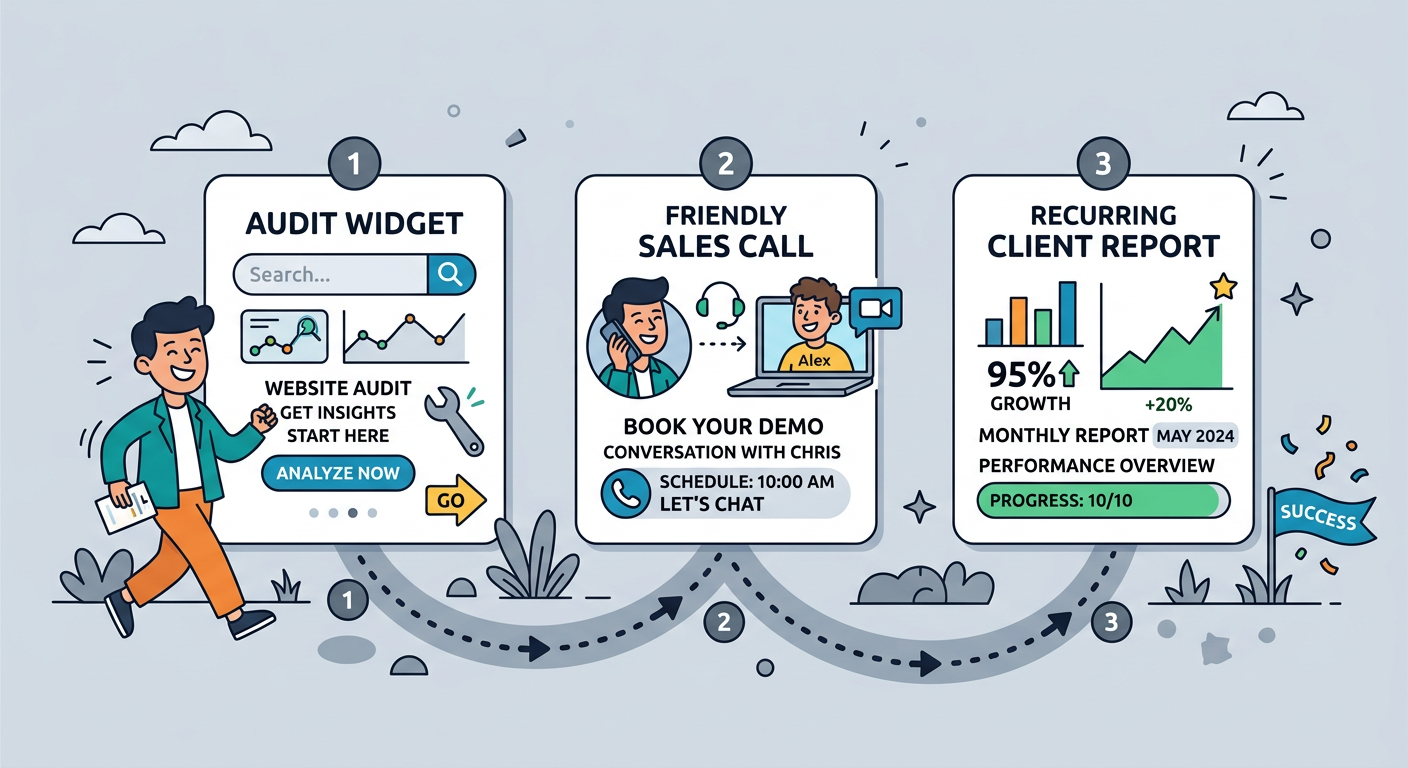
- Repeatable client reporting: The initial audit should naturally lead into recurring audits, keyword tracking, content updates, and account reviews.
A tool with excellent diagnostics but weak lead handling creates more manual work. A beautiful widget with shallow findings creates curiosity but not enough reason to hire us. Resellers need both sides working together.
Compare the Best-Fit Options Before You Commit
The right platform depends on whether we need lead capture, deep technical crawling, AI visibility checks, or an all-in-one operating layer. Use this quick comparison to narrow the field before starting trials.
| Tool | Best Fit | White Label and Embed | Starting Price |
|---|---|---|---|
| Marvlus | Agencies selling SEO and AI visibility | Branded widget, reports, lead management | Trial available |
| SEOptimer | Branded audit reports and embedded forms | Yes, on Embed plan | $59 per month |
| MySiteAuditor | Dedicated audit lead capture | Yes, on Professional plan | $79 per month |
| Semrush | Deep technical auditing at scale | Reporting add-on, not audit-widget-first | $139 per month |
Marvlus for Combined Lead Generation and AI Visibility
Marvlus is a strong fit when we want the audit itself to act as a lead magnet and a sales asset. Its agency offering supports branded audit widgets, white-labeled reports, anonymous share links, and lead capture, while also assessing traditional SEO and AI-search visibility signals. See the agency-focused white-label audit platform for the available workflow.
For an early-stage reseller, the practical advantage is consolidation. Instead of stitching together a form builder, crawler, reporting tool, and spreadsheet, we can start with a single branded audit experience and use the findings to frame a focused conversation.
SEOptimer for Straightforward Branded Reporting
SEOptimer is a well-established choice for agencies that want configurable branded audit reports and an embedded form. Its white-label embed tier is listed at $59 per month, and its product includes white-label PDFs, lead notifications, and GEO-related checks for AI visibility. SEOptimer is particularly useful when we want a familiar SEO reporting workflow without a full agency operating platform.
The tradeoff is that lead follow-up and broader client operations may still require separate tools. That is fine for a reseller with a stable CRM and a clear process already in place.
MySiteAuditor for Audit-First Lead Capture
MySiteAuditor is built around embeddable, branded audit forms designed to collect prospect details before producing an audit. Its Professional plan is listed at $79 per month and includes unlimited embedded forms, automated reports, AI-search checks, multi-page crawling, CRM integrations, and conversion tracking. MySiteAuditor is a sensible option if our primary objective is turning service-page traffic into sales conversations.
It is less attractive when we need broad SEO research, ongoing visibility tracking, or a unified reporting system. In that case, plan for additional software and process steps.
Semrush for Serious Technical Depth
Semrush is the heavier technical option. Its Site Audit product covers more than 140 checks and includes AI crawler accessibility checks, while SEO plans start at $139 per month on monthly billing. White-labeled reporting is an additional paid reporting feature. Semrush is best when our fulfillment model depends on robust crawling, extensive keyword data, and larger client portfolios.
For a new reseller offer, that power can also be more than we need. If the first goal is to validate demand, build a sales script, and close a few recurring clients, an audit widget designed for lead capture may create faster learning.
Build the Offer Around the Audit, Not the Other Way Around
An audit should lead to one tightly defined offer. When we give every prospect a sprawling list of 80 fixes, we create uncertainty and invite them to do nothing.
Start with one audience and one business problem. A local SEO reseller might offer a “Local Visibility Fix Plan” that addresses Google Business Profile gaps, service-page relevance, review signals, and location-page structure. An AEO or GEO reseller might offer an “AI Discovery Sprint” focused on crawl access, topical coverage, clear answer formatting, entity consistency, and high-value prompt tracking.
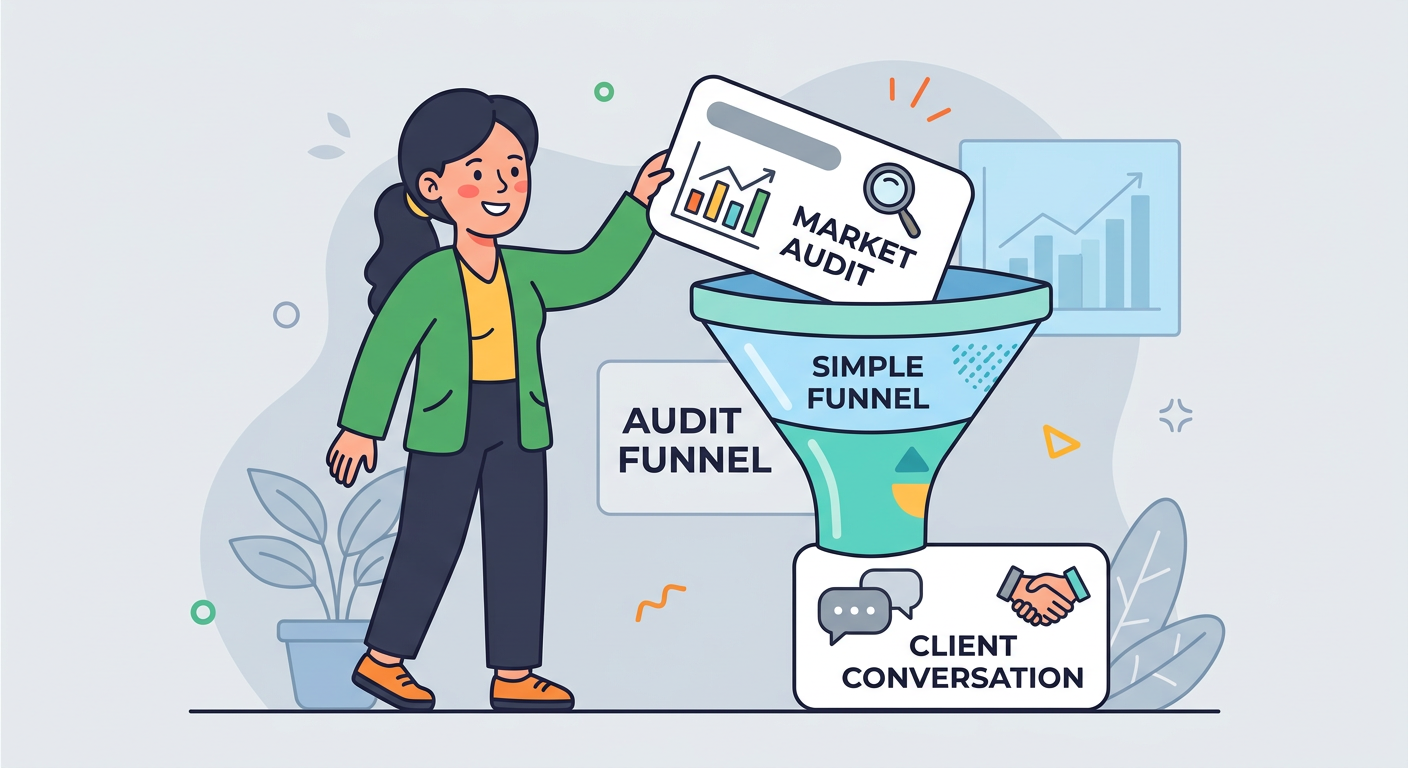
Then set up a three-part audit-to-sale sequence:
- Deliver the audit immediately. Make the report useful enough to earn attention, but use plain language and a clear priority order.
- Send a human follow-up. Within one business day, point to two findings with commercial impact. Avoid sending a generic calendar link with no context.
- Sell a small first engagement. A two- to four-week fix sprint is easier to buy than an open-ended retainer. Once we show progress, we can transition into ongoing optimization and reporting.
For additional perspective on shaping an agency offer around helpful audits, see this agency launch playbook. The principle holds up: help first, then make the next decision easy.
A Day 21 Plan for an Early-Stage Reseller Offer
By day 21, we do not need a massive library of services or a complex partner program. We need proof that our positioning, audit experience, and follow-up process can create qualified conversations.
Days 1 Through 7: Pick a Narrow, Sellable Use Case
Choose one vertical or service gap where we can speak with confidence. Good examples include AI visibility for B2B SaaS firms, technical cleanup for web design agencies, or local landing-page optimization for multi-location businesses.
Build one landing page around that outcome. Place the audit widget above the fold or immediately after a clear promise. Keep the form light, but collect enough information for useful follow-up: name, email, website, company, and optional monthly marketing budget.
Days 8 Through 14: Create a Human Review Layer
Automated audits create the opening, but our expertise closes the gap. Write a short internal review checklist that helps us add judgment before outreach:
- Which issue is likely costing the prospect visibility or conversions?
- Which recommendation can be fixed quickly?
- What service package solves the root problem?
- What proof or example will make the recommendation credible?
Use the same checklist on every lead for two weeks. We will quickly see which findings consistently create replies and which messages sound too technical.
Days 15 Through 21: Measure Sales Signals, Not Vanity Metrics
Track audit completions, contactable leads, replies, booked calls, proposals sent, and closed work. Ten audit submissions with three real conversations are more valuable than 100 anonymous scans.
This is also the point to decide whether our traffic needs improvement or our offer needs refinement. If visitors use the tool but do not reply, our follow-up may be too generic. If visitors never start the audit, the page promise, placement, or audience targeting may be off.
Once prospects become clients, pair recurring reports with a visible outcome metric. Branded keyword tracking for agency clients can help us connect implementation work with changes in rankings, clicks, and page performance.
Common Mistakes That Make Audit Widgets Underperform
Most audit tools fail because the surrounding experience is weak, not because the checks are inaccurate. We can avoid the most common issues with a few deliberate decisions.
Asking for Too Much Before Delivering Value
Long forms reduce completion rates, especially from cold traffic. Ask only for information we will genuinely use, then provide an immediate result that feels specific to the prospect’s site.
Treating Every Finding as Equally Important
A report with dozens of red flags can look impressive, but it can also overwhelm a business owner. Lead with one revenue-relevant issue, one credibility issue, and one achievable quick win.
Sending Unbranded, Generic Reports
If the report looks like a vendor’s demo, it weakens our positioning as the expert. Make branding consistent from the widget through the report, email follow-up, calendar page, and proposal.
Forgetting the Mobile Experience
Many prospects will encounter our landing page on a phone. Test the audit form, report readability, confirmation screen, and booking flow on mobile before spending money on traffic.
Ignoring AI-Search Readiness
Traditional technical checks still matter, but client questions increasingly include visibility in AI-driven discovery. Use an audit process that considers crawl access, helpful page structure, topical depth, and clear brand information alongside classic SEO basics.
Frequently Asked Questions
Do we need a white-label audit tool if we already use an SEO crawler?
Usually, yes, if lead generation or reseller credibility is a priority. A crawler helps us diagnose sites, while a white-label widget creates a branded prospect experience and captures the information needed to start a sales conversation.
How much should a reseller charge for an audit?
A free automated audit works well as a lead magnet, while a paid expert audit should include analysis our team adds beyond the software output. Many resellers use the free report to qualify interest, then sell a fixed-scope diagnostic or implementation sprint.
Can we use an audit widget on more than one landing page?
Yes, and we should. Tailor the surrounding copy to each audience, such as local businesses, SaaS companies, or web design partners, while keeping the audit workflow consistent behind the scenes.
Will an audit tool replace a discovery call?
No. It makes the discovery call better. We still need to understand business goals, internal resources, sales cycles, previous marketing work, and the client’s ability to implement recommendations.
What should we do when an audit finds dozens of issues?
We should prioritize, not panic. Group fixes into immediate blockers, high-impact opportunities, and maintenance work, then recommend a sequence that matches the client’s budget and capacity.
Is white labeling enough to make us look credible?
No. Branding creates consistency, but credibility comes from accurate explanations, thoughtful prioritization, and clear follow-through. The audit opens the door. Our expertise is what earns the relationship.
Put a Branded Audit at the Center of Your Pipeline
If we want to turn website traffic and partner referrals into better sales conversations, start with a branded audit experience that gives prospects a useful answer before asking for their time. Explore Marvlus to test a free AI website audit, build white-labeled reports, and organize new leads in one workflow.
The Bottom Line
The best white label website audit tool for resellers is the one that supports the business model we are actually building. For early-stage agencies, that usually means a polished embedded audit, focused recommendations, quick lead routing, and a simple service offer that can be delivered consistently.
Start narrow, make the audit genuinely helpful, and measure conversations rather than downloads. When the audit becomes the first useful moment in our client relationship, it stops being a report generator and becomes a dependable source of qualified opportunities.


