

Keeping clients long term is the most reliable way to grow revenue and scale without constantly hunting new leads. In a market where project budgets tighten and expectations rise, agencies that prioritize retention outperform those focused only on acquisition. Here, you will get a practical, progressive plan of agency client retention strategies you can implement across account management, pricing, contracts, and service delivery.
Bold the one: agency client retention strategies. Use this guide as a playbook, and adapt each tactic to your size and niche.
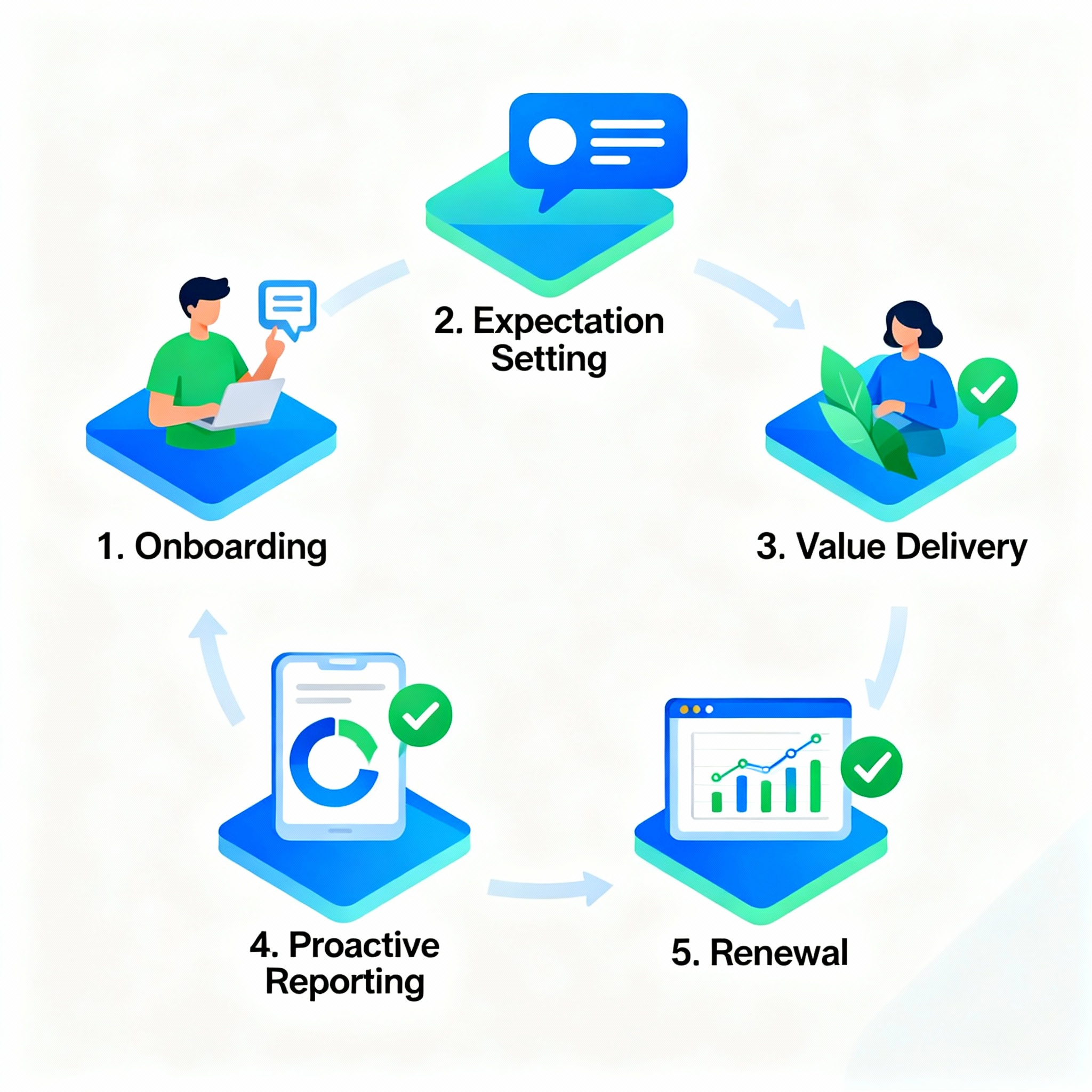
Why retention matters now
You already know new business is expensive. The math favors keeping and expanding existing accounts: lower acquisition cost, higher close rates, and faster time to revenue. But retention is not passive. It needs systems: predictable onboarding, measurable outcomes, scheduled business reviews, and smart contracts that encourage renewals.
Core retention tactics (fast wins)
1. Onboard to outcomes, not tasks
A smooth onboarding that defines success in measurable terms turns projects into partnerships. Create a 30-60-90 day plan that lists the first milestones, KPIs, reporting cadence, and who’s accountable on both sides. This reduces early churn and sets expectations.
2. Price for continuity and outcomes
Offer tiered retainers or outcome-based packages that reward longer commitments. Combine a base retainer for core work with performance bonuses for milestone outcomes. This aligns incentives and makes renewals feel natural.
3. Implement regular business reviews
Quarterly Business Reviews (QBRs) should focus on results, insights, and next-quarter opportunities. Use the QBR to surface strategic recommendations, not just tactical updates. A strong recommendation list with clear ROI is the single best predictor of renewal conversations.
4. Measure and report value weekly or monthly
Frequent, digestible reporting keeps value front of mind. Send a one-page monthly wins summary plus one dashboard link. If numbers sometimes dip, pair the data with an action plan so clients see you solving problems proactively.
5. Create expansion plays early
Identify natural upsell moments during onboarding and the first 90 days. Map cross-sell pathways for services that compound value, such as linking content strategy to SEO retainers or CRO audits to paid media budgets.
System-level strategies (scaleable processes)
6. Standardize client handoffs and documentation
A repeatable playbook for onboarding and role handoffs reduces friction and protects relationships when people change. Document campaigns, decisions, login credentials, and the results history in a central, secure location.
7. Use client health scoring
Develop a simple client health score (e.g., engagement, results vs. plan, payment timeliness, NPS). Automate alerts when scores drop so account teams can intervene before issues escalate.
8. Build a renewal playbook and timeline
Treat renewals like sales: prepare a renewal proposal 60 days before contract end, surface outcomes and next-step investments, and schedule decision calls. Use templates but personalize the value narrative.
9. Invest in proactive communication and education
Host client workshops, invite them to strategy sessions, and send short education briefs that show thought leadership. Clients who learn with you feel ownership in the strategy and are less likely to leave.
10. Offer flexible contract terms that reward loyalty
Include incentives like price caps, added services, or phased commitments for multi-year agreements. Flexibility can be more persuasive than deep discounts.

Handling common objections
Clients say they need to pause or cut budget. Your response should be consultative: propose a short-term pivot, preserve core tracking, and offer scaled-down options with clear conditions to re-expand. That keeps the relationship alive and prevents full churn.
Worried about cost versus value? Reframe the discussion around avoided cost and projected outcomes. A short ROI scenario in your QBR often resolves budget doubts.
Team and culture moves that matter
- Align incentives: reward account managers for renewals and expansion, not only for new sales.
- Hire client-focused roles: senior strategists who can speak ROI, and success managers who drive onboarding and adoption.
- Run internal retrospectives after renewals and churns to spot systemic issues.
Metrics to track weekly, monthly, and quarterly
- Weekly: campaign-level KPIs and delivery milestones
- Monthly: client health score, utilization, and billing status
- Quarterly: churn rate, net revenue retention, average contract length, and customer lifetime value
FAQ
How often should I run a formal business review with clients?
Aim for at least quarterly. High-value clients may benefit from monthly strategic check-ins. The key is consistency and focusing on outcomes and next steps.
What’s an acceptable churn rate for digital agencies?
Benchmark expectations vary by niche, but treating any unexpected churn as a signal to improve processes is vital. Your goal should be continuous improvement rather than a fixed magic number.
Should retainers be time-based or outcome-based?
Both models work. Time-based retainers give predictability, outcome-based retainers align incentives. A hybrid model often balances cash flow and performance motivation well.
How do I price for long-term retention without undercutting revenue?
Use tiered options and bonus structures. Reward longer commitments with modest price benefits while safeguarding margin through performance clauses.
How do I win renewals when a client’s internal priorities shift?
Re-center conversations on business outcomes and show short-term wins that tie to their new priorities. Offer flexible pilots that prove value fast.
What tools make retention easier?
A combination of project management, reporting dashboards, and CRM with renewal reminders will streamline workflows. Automate what you can, humanize what matters.
When should I escalate a client risk issue internally?
Escalate as soon as a client health score drops or when there are repeated missed outcomes. Fast, coordinated response reduces churn risk.
Next steps you can implement this week
- Build a 30-60-90 onboarding template. 2. Schedule your next QBR for each client. 3. Create a renewal timeline and set reminders 90 and 60 days ahead.
Action to grow retention and revenue
If you want help turning this into a repeatable program for your agency, get a strategic review and tailored playbooks from Auditsky. Start with a diagnostic to find the biggest retention gaps and a prioritized roadmap to fix them. Visit https://auditsky.ai to schedule a consult and see how we help SEO and digital marketing firms convert clients into long-term revenue.
Conclusion
Retention is a system, not a single tactic. Focus on onboarding to outcomes, regular business reviews, transparent reporting, and renewal playbooks. Small process improvements compound into dramatically lower churn and higher lifetime value. Start with one system change this month and measure the impact at 90 days.