Every agency needs a predictable, high-value product they can deliver quickly and brand as their own. If you want to scale service offerings, win more retainers, and turn audits into predictable revenue, a white label approach removes friction and lets your team focus on strategy and conversions.
With a bold focus on resaleability and repeatability, a white label seo audit for agencies packages technical checks, content recommendations, speed fixes, and conversion opportunities into a client-ready, branded report. Below is a practical playbook you can adopt today, even if you have limited dev resources.
Why white label audits scale better for agencies
Here is the thing, clients love clarity. They want to know what to fix and why it matters. A repeatable white label audit gives you a packaged deliverable that:
- Saves your team hours by standardizing data collection and reporting.
- Lets sales sell a tangible, framed product, instead of an abstract hourly service.
- Keeps your brand front and center, while letting you use third-party tools and templates behind the scenes.
When you package an audit as a product, pricing, delivery, and expectations become easier to manage. That reduces scope creep and improves conversion rates from audit to retained work.
What a strong white label SEO audit should include
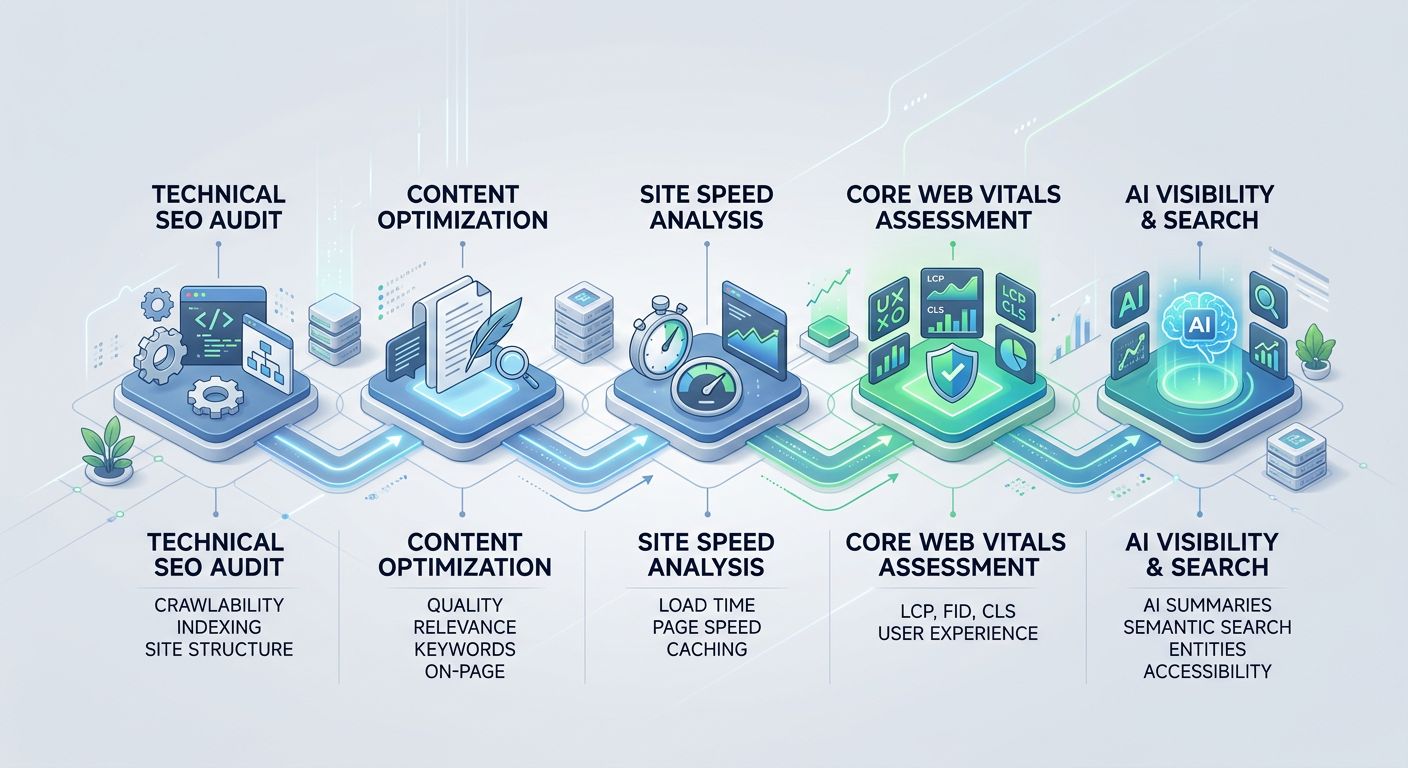
Technical SEO checklist
- Crawlability and indexation issues.
- XML sitemap and robots settings review.
- Canonicalization, redirects, and hreflang where relevant.
- Structured data errors and opportunities.
Performance and Core Web Vitals
- Page speed breakdown and prioritized fixes.
- Largest Contentful Paint, Cumulative Layout Shift, and First Input Delay analysis with concrete remediation steps.
- Image optimization and caching recommendations.
Content and on-page optimization
- Keyword mapping and content gaps compared to competitors.
- Title tags, meta descriptions, and header structure fixes.
- Thin content and duplicate content identification.
Conversion and UX insights
- Landing page conversion blockers and quick wins.
- Funnel leakage points and prioritized A/B test ideas.
- Accessible CTA placement and microcopy suggestions.
AI and discoverability audit
- AI search readiness, useful content signals, and semantic content opportunities.
- Chat and snippet optimization for conversational AI results.
- Content structuring for better generative search output.
Competitor and market context
- Competitive SERP features and share of voice.
- Top-performing content ideas and backlink opportunity clusters.
How to package and brand the audit
- Create a modular report template with branded cover, executive summary, prioritized roadmap, and appendix for raw data.
- Offer three tiers: Quick Technical Snapshot, Full Growth Audit, and Ongoing Monitoring.
- Include a simple price table and optional add-ons like implementation sprints or monthly AI visibility checks.
Pricing tip, start with a clear baseline price for the Quick Snapshot, then tier up based on site size and depth of analysis. Resellers should preserve margin while keeping MSRP attractive.
Tools, automation, and delivery workflow
- Use a blend of automated crawlers, speed labs, and manual review to balance cost and quality.
- Automate reporting where possible, then layer in manual commentary and strategic recommendations.
- Create an internal checklist to ensure every report includes business impact, effort estimates, and a 30/60/90 day roadmap.
Workflow example:
- Client intake and access collection.
- Automated scan within 24 hours.
- Analyst review and enrichment, 48 to 72 hours.
- Branded PDF report and short walkthrough call.
Sales and onboarding playbook
- Market the audit as a low-risk entry product, price it to win leads, then convert to retainers by demonstrating quick wins.
- During onboarding, ask business-focused questions, not only technical ones. That helps shape prioritized recommendations that will actually get funded.
- Offer a short follow-up workshop to turn the audit into an action plan, and present implementation bundles.
Handling common objections
Objection: "We can’t afford an audit right now."
Answer, offer a lightweight low-cost snapshot with clear, immediate ROI recommendations.
Objection: "We already did an audit."
Answer, show how your audit compares with previous work, and highlight missed priorities or new AI search opportunities.
Objection: "We want implementation included."
Answer, package implementation as optional blocks so the audit remains a clear deliverable and not an open-ended service.
FAQs
How long should a white label SEO audit take to deliver?
Most quick audits can be delivered in 3 to 5 business days. A comprehensive audit with competitor analysis and manual content review usually takes 7 to 14 days depending on site size.
Can small agencies offer white label audits without in-house developers?
Yes, focus your audit on prioritized recommendations and partner with a trusted freelance developer or implementation partner for execution. That keeps your overhead low.
What format is best for delivering a white label audit to clients?
A branded PDF with an executive summary, a prioritized 30/60/90 roadmap, and an appendix for raw data works well. Offer a recorded walkthrough or a short live call to explain the priority items.
How do you price reseller or white label audit services?
Use tiered pricing based on depth and site complexity. Offer a lower entry price to attract leads, then upsell implementation or monitoring packages.
Should audits include technical code snippets or only recommendations?
Include specific remediation steps and example code snippets for developers, but keep the executive summary non-technical for decision makers.
How do white label audits help close retainers?
Audits create clarity. When you show prioritized, revenue-focused fixes and quick wins, clients are more likely to fund implementation retainers.
What makes an audit "AI-ready"?
AI-ready audits focus on semantic structure, useful content signals, FAQ and schema adoption, and optimizing for conversational snippets and generative results.
Ready to scale your agency’s audit service?
Turn audits into a dependable growth product that sells, converts, and retains clients. If you want a tested white label audit template, delivery workflow, and branded report options, check out https://auditsky.ai to see how our audit packages can speed your launch and improve conversion.
Conclusion
White label SEO audits are more than a deliverable, they are a business lever. Pack audits into repeatable, branded products, prioritize business impact over endless checklists, and automate what you can while humanizing recommendations. Do that, and audits will stop being a one-off lead magnet and become a reliable path to recurring revenue.