
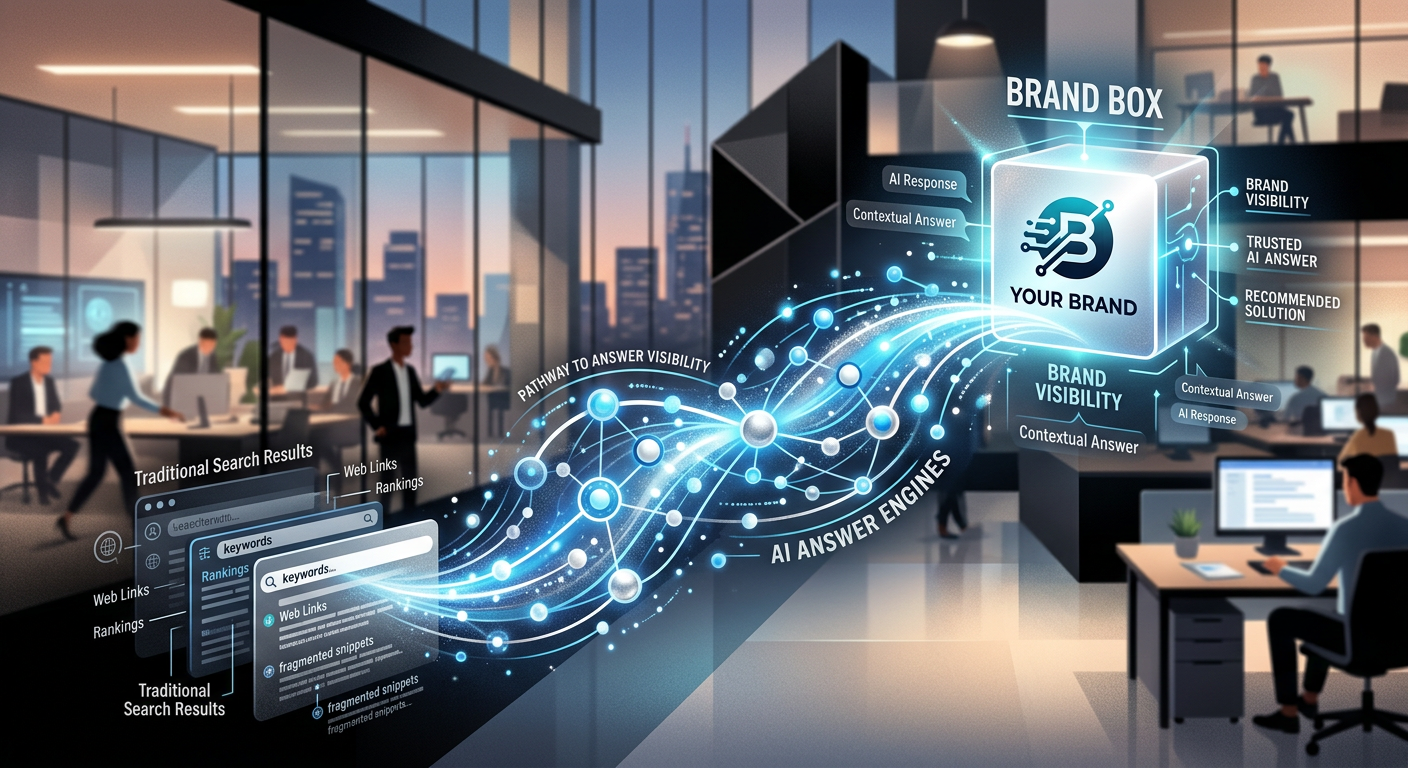
Most businesses are still optimizing for search engines that show ten blue links, while buyers are increasingly getting answers from AI-powered results, chat assistants, and AI search summaries. That shift changes the game fast, because being “ranked” is no longer enough if your brand is not visible in the places people now ask questions.
That is exactly why an ai visibility audit for business matters. It helps you find out whether AI systems can understand, trust, and surface your content when prospects ask the questions that lead to revenue.
Why AI Visibility Matters Right Now
AI-driven discovery is changing how people research vendors, compare services, and choose who to contact. If your site is easy for humans to browse but hard for AI systems to interpret, you may be missing qualified traffic before the buyer ever reaches your homepage.
For agencies, freelancers, and in-house marketers, this is not just a branding issue. It is a lead generation issue. If AI tools can summarize your expertise clearly, you have a better shot at being mentioned, cited, or recommended during the decision-making process.
What an AI Visibility Audit Looks At
An AI visibility audit checks how well your business shows up across AI-powered discovery surfaces. That includes content structure, brand clarity, technical accessibility, topical authority, and how confidently your site answers real buyer questions.
Here are the core areas to review:
1. Brand and Entity Clarity
AI systems need to understand who you are, what you do, and who you serve. If your homepage, about page, service pages, and metadata send mixed signals, your chances of being surfaced accurately go down.
2. Content Depth and Topical Authority
Thin pages rarely win trust. You want content that clearly explains problems, solutions, proof, process, and outcomes. The more complete your topic coverage, the easier it is for AI to recognize your expertise.
3. Structured Data and Technical Signals
Schema markup, crawlability, internal linking, and clean site architecture all help machines read your site. These signals support both traditional SEO and AI search visibility.
4. Answer Quality for Buyer Questions
If your content does not directly answer the questions people ask before they buy, you are leaving visibility on the table. Think pricing, process, comparisons, implementation, and outcomes.
5. Conversion Readiness
Visibility is only useful if it turns into action. Your audit should also examine whether landing pages, forms, calls to action, and trust elements are strong enough to convert the traffic you earn.
How To Run an AI Visibility Audit for Business
You do not need an enterprise budget to get started. A practical audit can be done in a focused sequence that reveals the biggest opportunities first.
Step 1: Review Your Core Pages
Start with your homepage, key service pages, and top blog posts. Ask whether each page clearly states what the business does, who it helps, and why it is credible.
Step 2: Map Buyer Intent Questions
List the questions prospects ask before contacting a provider. For example, “Which agency can help with AI search optimization?” or “How do I improve my site for AI answers?” Then compare those questions to the content you already have.
Step 3: Audit Content for AI Readability
Short paragraphs, descriptive headings, concise summaries, and direct answers help AI systems extract meaning. If pages are cluttered, vague, or overly promotional, they are harder to interpret.
Step 4: Check Technical Foundation
Make sure important pages are indexable, internally linked, and properly marked up. Also review speed, mobile usability, and accessibility, because weak technical performance can limit visibility and conversion.
Step 5: Measure Brand Mentions and Citability
Look at where your brand is mentioned online, whether industry sources recognize you, and whether your content is the type other sites would reference. External credibility still matters a lot in AI-assisted discovery.
What To Fix First for Faster Results
If your team has limited dev resources, focus on high-impact fixes first. That usually means improving service pages, strengthening internal links, adding FAQ sections, expanding proof points, and tightening page titles and descriptions.
You can also create comparison pages, use-case pages, and expert guides that answer buying-stage questions. This kind of content helps you show up earlier in the research process and makes your brand easier for AI systems to recommend.
Common Mistakes Businesses Make
A lot of teams assume that strong SEO alone guarantees AI visibility. It does not. Traditional rankings help, but AI systems also rely on clarity, context, trust signals, and content that is easy to summarize.
Another mistake is writing content for algorithms instead of people. The best pages are useful to humans first and machine-readable second. When those two goals align, you usually get the best results.
FAQ
How is an AI visibility audit different from a regular SEO audit?
A regular SEO audit focuses on rankings, crawlability, technical health, and keyword performance. An AI visibility audit adds an extra layer, checking whether your business is understandable and trustworthy to AI systems that generate answers.
Do small businesses really need this?
Yes. Smaller brands often benefit the most because they can move faster. If you improve clarity, authority, and conversion experience before competitors do, you can gain visibility in emerging AI-driven discovery channels.
Can content alone improve AI visibility?
Content helps a lot, but it is not enough on its own. You also need technical structure, internal links, trust signals, and strong page experience so both users and machines can evaluate your site properly.
How often should I run an AI visibility audit?
A quarterly review is a good starting point for most businesses. If you publish often, launch new services, or operate in a competitive market, monthly check-ins may be more useful.
What pages matter most?
Homepage, core service pages, location pages if relevant, top converting blog posts, and comparison or FAQ content usually matter most. These pages shape both discoverability and conversion.
Will this help with leads, not just traffic?
Absolutely. Better visibility is only part of the goal. A strong audit also improves the path from discovery to inquiry, which is what actually drives revenue.
Build a Smarter Visibility Strategy
If you want more than just traffic, your site needs to be easy for AI systems to understand and easy for buyers to trust. That is where a well-run audit becomes a growth lever, not just a technical exercise.
Start with the pages that influence buying decisions, fix the signals that confuse machines, and create content that answers real questions with confidence. Over time, that approach can improve both your AI visibility and your lead quality.
Get Started With a Visibility Audit
If you are ready to find the gaps holding your site back, start with a focused review of your pages, structure, and conversion paths. You can also explore the audit services at https://auditsky.ai to see how a more complete visibility strategy can support your growth.
Conclusion
An ai visibility audit for business helps you see where your brand stands in a search landscape that is changing fast. It is one of the smartest ways to improve discoverability, build trust, and turn more visitors into leads.
The businesses that win next will not just be found, they will be understood, recommended, and chosen.