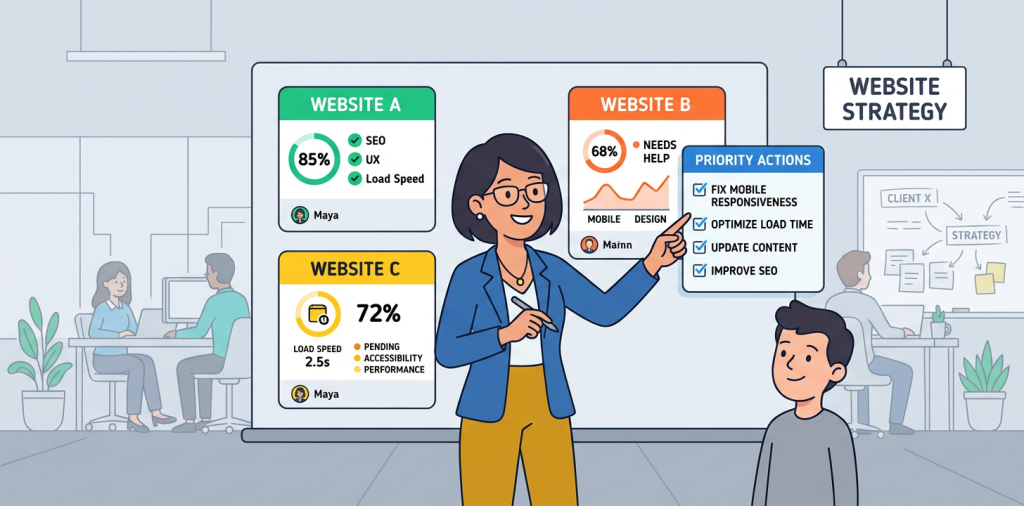
A polished audit can open a sales conversation, but a branded audit can make your agency feel established before the first call. For early-stage SEO, AEO, GEO, and digital marketing agencies, that difference matters when you are still building proof, process, and predictable lead flow.
What is a white label audit? It is an SEO, website, AI visibility, paid media, or performance review that carries your agency’s branding instead of the software provider’s. The findings, recommendations, logo, colors, and client-facing experience look like they came directly from your team, even when technology helps produce the analysis behind the scenes.
A White Label Audit at a Glance
A white label audit gives agencies a repeatable way to show expertise without spending hours building every report from a blank document. It should feel useful enough to earn trust, while creating a clear path to a paid engagement.
| Element | Generic Audit | White Label Audit | Why It Matters |
|---|---|---|---|
| Branding | Vendor branding | Your logo and colors | Builds agency credibility |
| Delivery | Tool dashboard | Branded link or PDF | Feels client-ready |
| Findings | Broad data dump | Prioritized actions | Makes next steps clear |
| Follow-up | Often disconnected | Tied to your process | Creates sales momentum |
| Ownership | Vendor-led experience | Agency-led experience | Protects the relationship |
A strong audit is not a long list of technical errors. It is a diagnosis with a point of view: what is limiting performance, what should happen first, and why your team is qualified to help.

What a White Label Audit Includes
The best white label audits translate raw findings into business priorities. We want clients to see the gap, understand the consequence, and recognize a sensible route forward.
Branded presentation
At minimum, the report should use your agency name, logo, visual style, and contact details. A branded delivery page or shareable link is equally important because a prospect should not feel redirected into someone else’s product ecosystem.
This is more than a cosmetic upgrade. When the visual experience is consistent from your landing page to the report and follow-up email, your agency feels more deliberate and dependable.
Meaningful website findings
The scope depends on your service line, but a useful audit often covers areas such as:
- Technical SEO problems, including crawlability, redirects, broken links, page speed, and indexation
- On-page opportunities, including titles, headings, internal links, content gaps, and intent alignment
- Conversion blockers, such as weak calls to action, unclear value propositions, and confusing form paths
- Local visibility gaps for service businesses
- AI visibility signals, including clear entity information, answer-friendly page structure, and topical coverage
- Competitive patterns that reveal where a prospect is losing ground
For a useful baseline, link prospects to resources that clarify related work. Our explanation of topical authority and content clusters can help clients understand why a single optimized page rarely solves a broader visibility problem.
Prioritized recommendations
A report becomes persuasive when it distinguishes between urgent issues, quick wins, and longer-term improvements. Ten high-impact actions are more valuable than one hundred unexplained warnings.
We recommend grouping actions into three buckets:
- Fix first: problems that block visibility, lead capture, or user experience.
- Improve next: pages and content with a realistic upside.
- Build over time: authority, content depth, reputation, and reporting systems.
Why Agencies Use White Label Audits
White label audits help agencies package expertise into something prospects can understand quickly. They also make sales calls more focused because the conversation begins with the prospect’s own website, not a generic service pitch.
A 2025 report from HubSpot found that 98% of marketing teams use AI in some form. That does not mean clients want automated reports with no human judgment. It means agencies that combine fast analysis with clear recommendations can spend more time on strategy, relationship building, and implementation.
They create a value-first lead offer
An audit is a practical exchange. The prospect shares a site URL and a little context. We give them an informed look at what may be holding back performance.
That first value exchange lowers friction compared with asking someone to book a call before they know whether we understand their situation. It also gives our sales team a reason to personalize every follow-up.
They make service packages easier to explain
Prospects often struggle to picture what SEO, AEO, GEO, or technical optimization work actually includes. An audit makes the work visible.
Instead of saying, “We improve your online presence,” we can point to a missing service page, thin category content, inconsistent business information, or a page that needs a clearer answer near the top. Specific evidence makes a proposal feel grounded rather than abstract.
They support better client reporting
The audit can become the baseline for a monthly or quarterly reporting rhythm. It gives clients a record of the starting point, the actions taken, and the results that followed.
For agencies managing several accounts, keyword tracking for client sites can help connect audit recommendations to ongoing visibility progress. The goal is not to overwhelm clients with charts. It is to show what changed and what the team plans to do next.
How White Label Audits Fit an Early-Stage Agency Plan
For an early-stage agency, the fastest path is not offering every possible service. It is building one clear, repeatable entry offer that leads naturally into a focused engagement.
Think of your white label audit as a day 11 asset in a progressive content and lead-generation plan. By this point, you should know the audience you want to serve, the core problem you solve, and the pages on your site where visitors are most likely to become prospects.
Start with one niche and one promise
Avoid a broad offer such as “free marketing audit for everyone.” A tighter version might be:
- Free AI visibility assessment for B2B SaaS companies
- Local SEO review for multi-location home service businesses
- Website conversion review for boutique ecommerce stores
- Technical SEO audit for funded startups with stalled organic growth
A narrow offer helps us build a better audit template, write more relevant landing-page copy, and create follow-up messages that feel personal without requiring a custom process every time.
Use the audit as the middle of the funnel
Your content should prepare visitors to value the audit before they see the form. Publish helpful pages that explain common problems, demonstrate your thinking, and answer the questions a buyer asks before hiring an agency.
Then connect those pages to the audit offer. For example, an article about structured data can lead naturally to a review of schema and AI visibility. The reader learns something useful, recognizes a gap, and has a logical next step.
Build a simple follow-up sequence
An audit without follow-up is just a free report. Plan the next three interactions before the first prospect submits a URL:
- Send the branded report quickly with one personalized observation.
- Offer a short review call focused on the highest-impact finding.
- Share a scoped implementation option, not a vague retainer pitch.
Keep the conversation helpful. If a prospect is not ready, give them a useful next action and stay connected through relevant educational content.
What to Avoid When Creating a White Label Audit
The most common mistake is mistaking volume for value. A 50-page report full of red warnings might look impressive, but it can confuse a business owner and bury the opportunities that deserve attention.
Avoid generic recommendations
“Improve content” is not a recommendation. “Add a comparison page that explains your pricing model against the two alternatives prospects mention most often” is a recommendation.
Every major finding should answer three questions: What is wrong? Why does it matter? What should we do about it?
Avoid hiding the human judgment
Automation can collect data quickly, but clients hire agencies for interpretation and accountability. Add a short executive summary in plain language, then explain the top priorities in the context of the client’s goals.
A small amount of informed commentary can make an automated audit feel like a strategic asset rather than a template.
Avoid giving away the full implementation plan
The audit should show enough detail to establish trust, but it does not need to hand over every workflow, content brief, configuration, and roadmap. Give prospects clarity on the problem and the likely solution. Reserve the full execution plan for a paid engagement.
Frequently Asked Questions
Is a white label audit the same as a white label service?
No. A white label audit is a branded assessment or report, while a white label service usually means one provider fulfills work that another agency sells under its own brand. An audit can be part of a white label service model, but it can also be used solely as a lead-generation and client-reporting asset.
Can a small agency offer white label audits without a big team?
Yes. A small agency can create a useful audit offer by choosing one niche, using a consistent template, and limiting the review to the issues it can confidently solve. The key is a clear process, not a large headcount.
Should we charge for a white label audit?
Free audits work well when they are designed to qualify leads and lead into a defined service. Paid audits are often a better fit for larger sites, complex technical situations, or prospects who need a detailed roadmap before committing to implementation.
How long should a client audit be?
A prospect-facing audit is often most effective when it focuses on five to ten priorities. A paid diagnostic can be longer, but the executive summary should still make the top actions obvious within a few minutes.
What makes an audit feel credible to a prospect?
Specificity makes an audit credible. Use real examples from their site, explain the business impact in plain language, and avoid claims you cannot support. A clear action order also shows that your team knows how to move from analysis to execution.
Can we use the same audit template for every client?
Yes, as long as the framework is consistent and the insights are tailored. Reusing sections for technical health, content quality, conversion paths, and visibility is efficient. Reusing generic conclusions without reviewing the site is not.
Put a Branded Audit at the Center of Your Lead Flow
If your agency needs a stronger value-first offer, use a branded audit to replace vague contact forms with a useful first experience. Marvlus helps agencies deliver white-label AI and SEO audits, capture prospect details, and keep follow-up organized in one workflow.
Start with one audience, one audit promise, and one clear follow-up process. You can refine the offer as real prospects show you which problems they care about most.
A Branded Audit Creates a Better First Conversation
A white label audit is not a report with your logo pasted on top. Done well, it is a repeatable agency asset that demonstrates expertise, creates useful sales conversations, and gives clients a clearer reason to choose your team.
For a new agency, the advantage is focus. Build an audit around the work you want to sell, explain the findings like a strategic partner, and use every completed report to improve your positioning, process, and pipeline.