Most websites do not have a traffic problem, they have a conversion problem. If people are landing on your pages and leaving without taking action, the issue usually comes down to clarity, trust, speed, or friction.
The good news is that you do not need a full redesign to improve website conversion rate. Small, focused changes can often create the biggest lift, especially when you fix the pages already getting traffic from SEO, ads, email, or AI search.
What It Really Means to Improve Website Conversion Rate
Improving conversion rate means helping more visitors do the thing you want them to do, whether that is booking a call, requesting a quote, starting a trial, downloading a lead magnet, or buying a product. It is less about getting more people to the site and more about making each visit count.
For early stage businesses, this matters even more. When traffic is limited, every page view has to work harder, so even a modest improvement can make a meaningful difference in leads and revenue.
Start With the Pages That Already Get Attention
Before you touch anything else, look at the pages that already bring in traffic. Your homepage, top blog posts, service pages, pricing page, and landing pages usually have the most conversion upside because they already have visitors.
If you need a fast way to spot weak pages, combine analytics with a website audit. A tool like Auditsky can help you identify SEO gaps, AI visibility issues, and page-level opportunities so you know where conversion fixes will matter most.
Focus on intent, not just traffic
A page can attract the right audience and still fail to convert if the message is vague. Ask yourself what the visitor wants in that exact moment, then match the page to that intent.
For example, a blog visitor may need a soft conversion like a checklist or audit, while a pricing page visitor may need a direct demo or free trial.
Clarify Your Value Proposition Fast
If people cannot understand what you do within a few seconds, they will leave. Your headline, subheading, and hero section should make the offer feel obvious, specific, and relevant.
Strong value propositions usually answer three questions quickly:
- What do you do?
- Who is it for?
- Why should I care?
Be direct. Instead of saying you help businesses grow, say exactly how you help them grow, such as by improving SEO, increasing AI visibility, or turning more visitors into leads.
Reduce Friction at Every Step
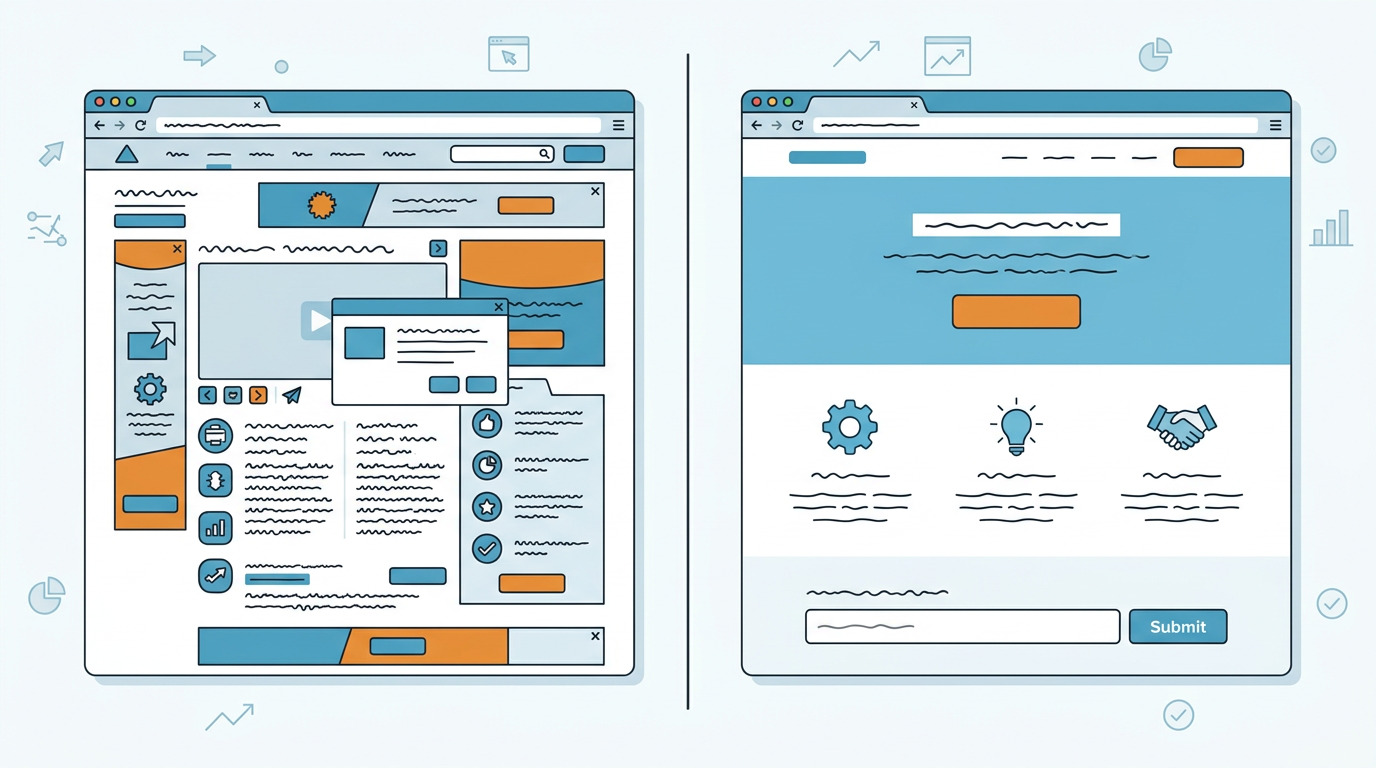
A high-converting page feels easy to use. That means fewer fields, fewer distractions, and fewer decisions.
Simplify forms
Long forms can crush conversions. Only ask for the information you truly need to qualify the lead or complete the next step.
Remove unnecessary links
Every extra link on a landing page creates a possible exit. Keep the visitor focused on one primary action.
Make the next step obvious
Your buttons should tell people exactly what happens next. “Get My Free Audit” is better than “Submit.”
Improve Website Conversion Rate With Better Trust Signals
Trust is a huge part of conversion. People often want proof before they act, especially if your business is new or they have not heard of you before.
Add trust signals where they matter most:
- Customer testimonials
- Case studies
- Reviews
- Client logos
- Security badges
- Clear contact details
- Return or guarantee language when relevant
If you sell a service, show outcomes, not just features. If you sell software, show how it solves a real business problem. If you run a local business, make your location, service area, and process easy to verify.
Speed and Mobile Experience Still Matter a Lot
A slow or awkward mobile experience can quietly kill conversions. Visitors do not wait around for pages that load slowly, buttons that are hard to tap, or text that is difficult to read.
Here is the practical rule: if your site is frustrating on mobile, you are losing leads. That is especially true for service businesses, SaaS, and eCommerce brands, where a large share of traffic comes from phones.
Check for:
- Large images slowing down load time
- Popups that cover the screen on mobile
- Tiny buttons and text
- Forms that are hard to complete on a phone
- Pages that jump around while loading
Use Content to Move People Toward Action
Your content should not just inform, it should guide. Blog posts, guides, and comparison pages can all support conversions when they include clear calls to action.
Try adding:
- Mid-article content upgrades
- Related service links
- Contextual buttons after helpful sections
- FAQ blocks that reduce objections
- Soft offers for visitors who are not ready to buy yet
This is also where AI search optimization helps. When your pages are structured clearly, they are easier for both search engines and AI tools like ChatGPT and Gemini to understand, which can improve visibility and send more qualified traffic.
Make Your Offers Easier to Say Yes To
Sometimes the page is fine, but the offer is too big, too vague, or too risky.
You can often improve conversion rate by reframing the offer:
- Offer a free audit instead of a sales call
- Offer a checklist instead of a long ebook
- Offer a short demo instead of a full commitment
- Offer a smaller first step before the main purchase
For agencies and service providers, this is especially powerful. A lower-friction offer can turn more cold visitors into warm leads, which gives you more chances to close later.
Test One Change at a Time
Conversion improvement works best when you test methodically. If you change five things at once, you will not know what actually helped.
Start with high-impact tests like:
- Headline variations
- CTA button copy
- Form length
- Page layout
- Social proof placement
- Pricing presentation
Measure one primary conversion goal at a time so the data stays clear.
A Simple Conversion-First Content Strategy for Early Stage Businesses
If you are early stage, do not try to optimize everything at once. Build a progressive system.
Week 1, fix the highest intent page
Start with your homepage, pricing page, or top service page. Make the value proposition clearer and remove friction.
Week 2, strengthen proof and trust
Add testimonials, proof points, FAQs, and examples. Make the buying decision feel safer.
Week 3, improve traffic quality
Update your content strategy so you attract more qualified visitors. Focus on keyword intent, internal linking, and pages that support both rankings and conversion.
Week 4, audit and refine
Use an audit to identify what is still holding you back. That could be page speed, poor internal linking, weak CTAs, or content that does not match search intent.
FAQ
What is the fastest way to improve website conversion rate?
Start with the page that gets the most qualified traffic and make the offer clearer. Then reduce friction, add trust signals, and tighten the call to action.
Does SEO affect conversion rate?
Yes, indirectly and directly. Better SEO brings more relevant visitors, and better on-page structure helps those visitors understand your offer and take action.
Should I focus on traffic or conversions first?
If your site already gets traffic, focus on conversions first. It is often easier and cheaper to get more value from existing visitors than to keep buying or earning more traffic.
What pages usually convert best?
Homepage, pricing pages, service pages, comparison pages, and high-intent landing pages usually perform best. Top blog posts can also convert well if they are matched to the right offer.
How do AI search tools affect conversions?
AI search tools can send more qualified visitors if your content is clear, well structured, and easy to interpret. That means better visibility can lead to better traffic quality and stronger conversion potential.
How often should I audit my website?
At least monthly if you are actively improving the site, and more often if you publish a lot of content or run campaigns. Regular audits help you catch issues before they hurt leads or sales.
Ready to Turn More Visitors Into Leads?
If you want to improve website conversion rate without guessing, start with a clear audit. Auditsky helps you spot SEO issues, AI visibility gaps, and growth opportunities so you can focus on changes that actually move the needle.
The fastest wins usually come from clarity, trust, and removing friction. Fix those, and your existing traffic can do a lot more work for you.
Conclusion
To improve website conversion rate, you do not need to reinvent your entire site. You need to make it easier for the right visitor to understand your offer, trust your brand, and take the next step.
Start with the pages that already get attention, refine the message, simplify the journey, and test improvements one at a time. That is how small businesses, SaaS teams, agencies, and content-driven brands turn more traffic into real results.