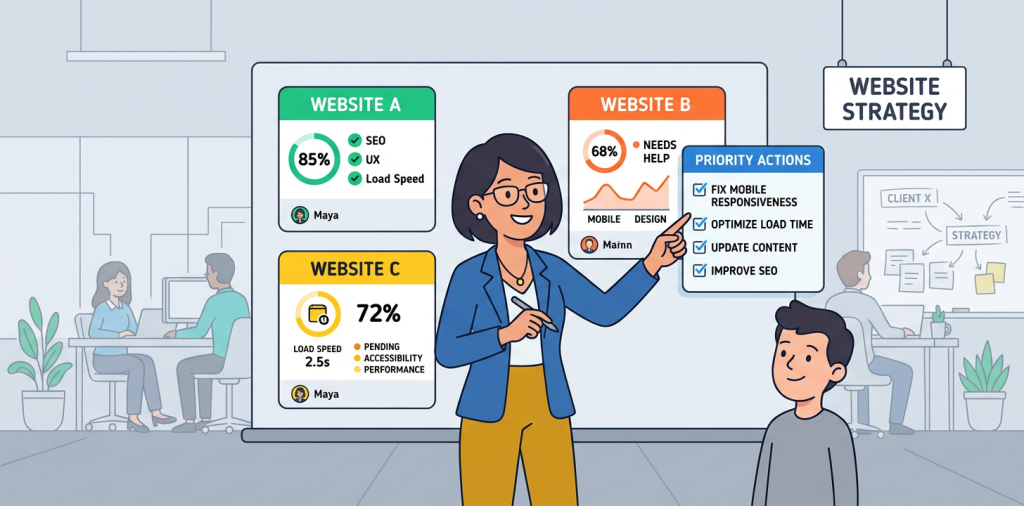
The wrong audit platform doesn’t usually fail because it misses every issue. It fails because it gives your team too much data, too little prioritization, or reports that don’t help clients understand what to approve next.
For agencies, a comparison of SEO audit platforms should go beyond a features checklist. We need to evaluate crawl depth, workflow fit, reporting, collaboration, AI-search coverage, and the amount of manual interpretation required before an audit becomes a billable recommendation.
At a Glance: Which Platform Fits Which Agency Need?
The best platform depends on whether we need deep technical investigation, an all-in-one SEO suite, visual client education, or a fast lead-generation audit. Most growing agencies benefit from pairing one primary crawler with a client-friendly opportunity layer.
| Platform | Best Fit | Standout Strength | Watch-Out |
|---|---|---|---|
| Semrush Site Audit | Full-service agencies | Broad SEO suite and reporting | Costs rise with seats and scale |
| Ahrefs Site Audit | Search-led agencies | Crawl data plus strong research stack | Reporting can require an add-on |
| Screaming Frog | Technical SEO teams | Deep crawl customization | Steeper learning curve for clients |
| Sitebulb | Consultative agencies | Visual explanations and audit hints | Desktop workflow may limit collaboration |
| Marvlus | Early-stage agency prospecting | AI visibility and actionable website opportunities | Not a replacement for forensic crawling |
What Agencies Should Compare Before Choosing an Audit Tool
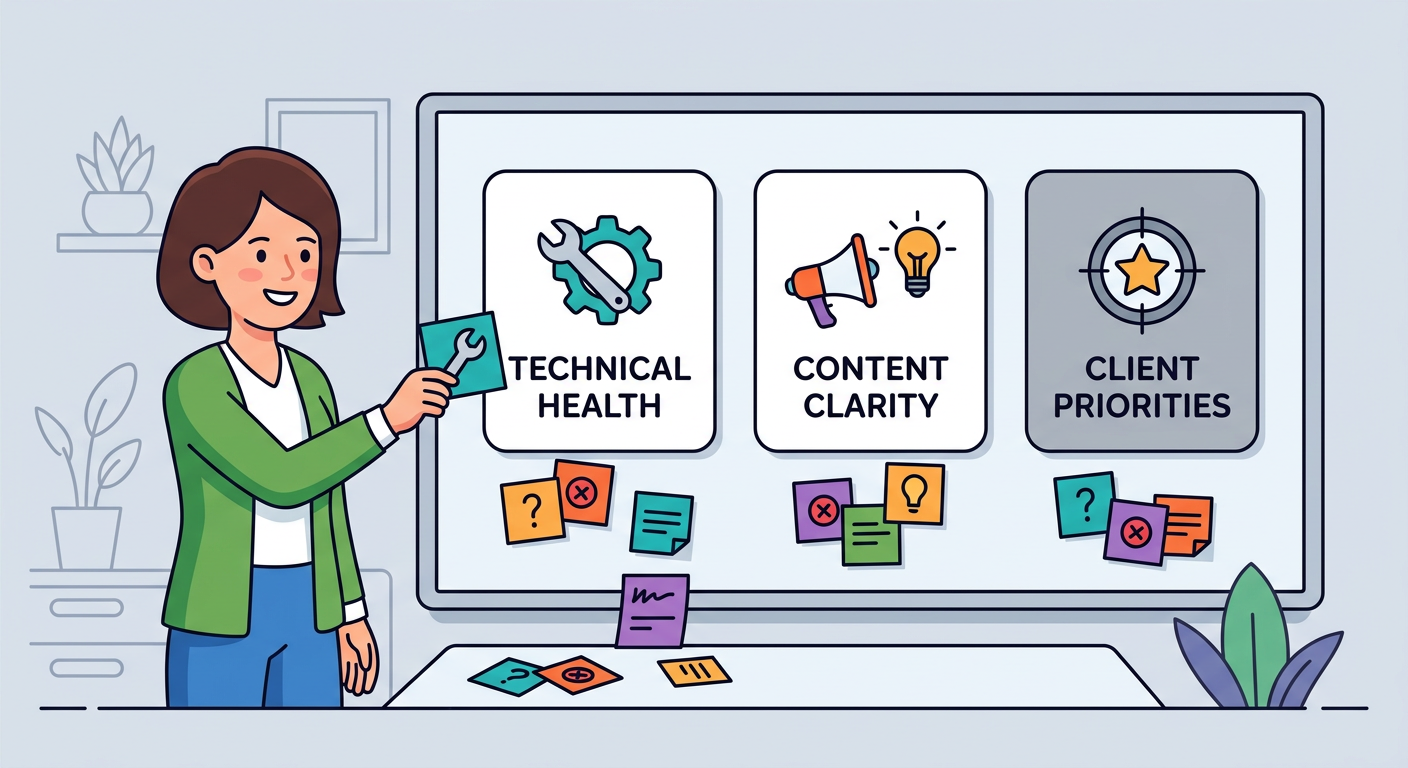
A strong audit platform helps us decide what matters first, not simply count errors. The practical question is whether it shortens the distance between crawl findings, a prioritized roadmap, and a client-approved scope of work.
Crawl depth and technical control
Screaming Frog remains a serious option for technical teams because it gives us granular control over crawls, JavaScript rendering, custom extraction, redirects, canonicals, hreflang, and integrations. Its free version is capped at 500 URLs, while a paid license opens larger crawls and advanced features, according to Screaming Frog’s pricing page.
This is the tool we reach for when a site migration is messy, templates are behaving inconsistently, or a development team needs exact evidence. The trade-off is that raw exports can overwhelm a client unless we translate findings into a concise action plan.
Issue coverage and ongoing monitoring
Semrush is the strongest all-in-one contender for agencies that want technical auditing alongside keyword research, position tracking, competitive research, and scheduled reporting. Its Site Audit product includes more than 140 on-page and technical checks, including crawlability, indexability, HTTPS, duplicate content, hreflang, and AI-search-oriented checks, as described in Semrush’s Site Audit documentation.
At the time of review, Semrush SEO plans start at $139 per month when billed monthly, and reporting or additional users can add cost. That makes it a good fit when we will actively use the wider suite, not just run occasional crawls.
Research depth beyond the crawl
Ahrefs is compelling for agencies that want the audit to connect directly to competitor research, link analysis, content gaps, keyword opportunities, and performance history. Its Lite plan begins at $129 per month and includes 100,000 crawl credits per month, while larger plans expand project, crawl, and reporting capacity, according to Ahrefs pricing.
Ahrefs works especially well when the conversation is not merely “what is broken?” but “what should this client build or improve to compete?” Agencies that already live in Ahrefs can reduce tool sprawl by using Site Audit as part of the same research workflow.
Client-ready explanations
Sitebulb earns consideration when our team sells strategic guidance, not just remediation tickets. Its visual reports and educational hints can make complicated technical patterns easier to explain during a client call, while Pro adds reports for performance, mobile friendliness, structured data, international SEO, accessibility, scheduling, and Google Sheets exports.
Sitebulb’s plan details position Pro for SEO professionals and agencies, while its cloud option is better suited to teams that need shared access and very large crawling capacity. It is a smart middle ground for agencies that want technical credibility without handing a client a dense spreadsheet.
The Platform Comparison That Matters for Early-Stage Agencies
For an early-stage agency, the best stack is usually not the biggest stack. We should first build a repeatable process that produces a useful prospect conversation, then add advanced tooling when recurring revenue supports it.
A practical Day 13 workflow looks like this:
- Run a quick audit before the sales call to identify three visible problems.
- Validate the issues with a technical crawler only when the prospect is qualified.
- Turn findings into a 30-, 60-, or 90-day roadmap with clear owners.
- Track progress with a small number of business-facing measures, such as indexed pages, priority keyword movement, conversions, and completed fixes.
This approach prevents a common early-stage mistake, buying an enterprise suite before we have a consistent audit offer. A prospect does not need 200 warnings. They need clarity on why their website is losing opportunities and what our team will do about it.
For example, a local service client might have a crawlable site but weak service-page copy, thin location coverage, unclear internal linking, and no useful FAQs. A conventional crawler will spot part of that picture. A growth-focused audit should also connect the technical baseline to content quality, topical gaps, and visibility in AI-assisted search experiences.
That is why it helps to build our process around a layered model. Start with a fast opportunity scan, use a robust crawler for diagnosis, then use content and competitive research to turn fixes into an ongoing engagement. Our related look at AI search optimization tools for smarter website growth explains why this sequence keeps tool spending aligned with business maturity.
Why Classic Technical Audits Are No Longer Enough
Technical SEO is foundational, but it is only one part of a useful agency audit. The best audits now combine accessibility, crawlability, content usefulness, site structure, entity clarity, and opportunities to answer real customer questions.
Google’s published Core Web Vitals targets are a useful example: Largest Contentful Paint should occur within 2.5 seconds, Interaction to Next Paint should be under 200 milliseconds, and Cumulative Layout Shift should stay below 0.1. Those thresholds are valuable diagnostic signals, but Google also cautions that strong performance scores alone do not guarantee high rankings. See Google’s Core Web Vitals guidance and its explanation of page experience.
For AEO and GEO agencies, we should add questions that traditional crawlers cannot fully answer:
- Does the page state the answer clearly near the top?
- Does the content demonstrate expertise with original examples?
- Can a visitor understand who the company serves and what it offers?
- Are service pages, comparison pages, FAQs, and supporting articles connected logically?
- Does structured data reinforce rather than contradict the page’s visible content?
This is where a comparison of SEO audit platforms becomes more nuanced. A crawler can identify a missing title or broken link. Our agency still has to determine whether a page is genuinely helpful, differentiated, and easy for people and answer engines to understand.
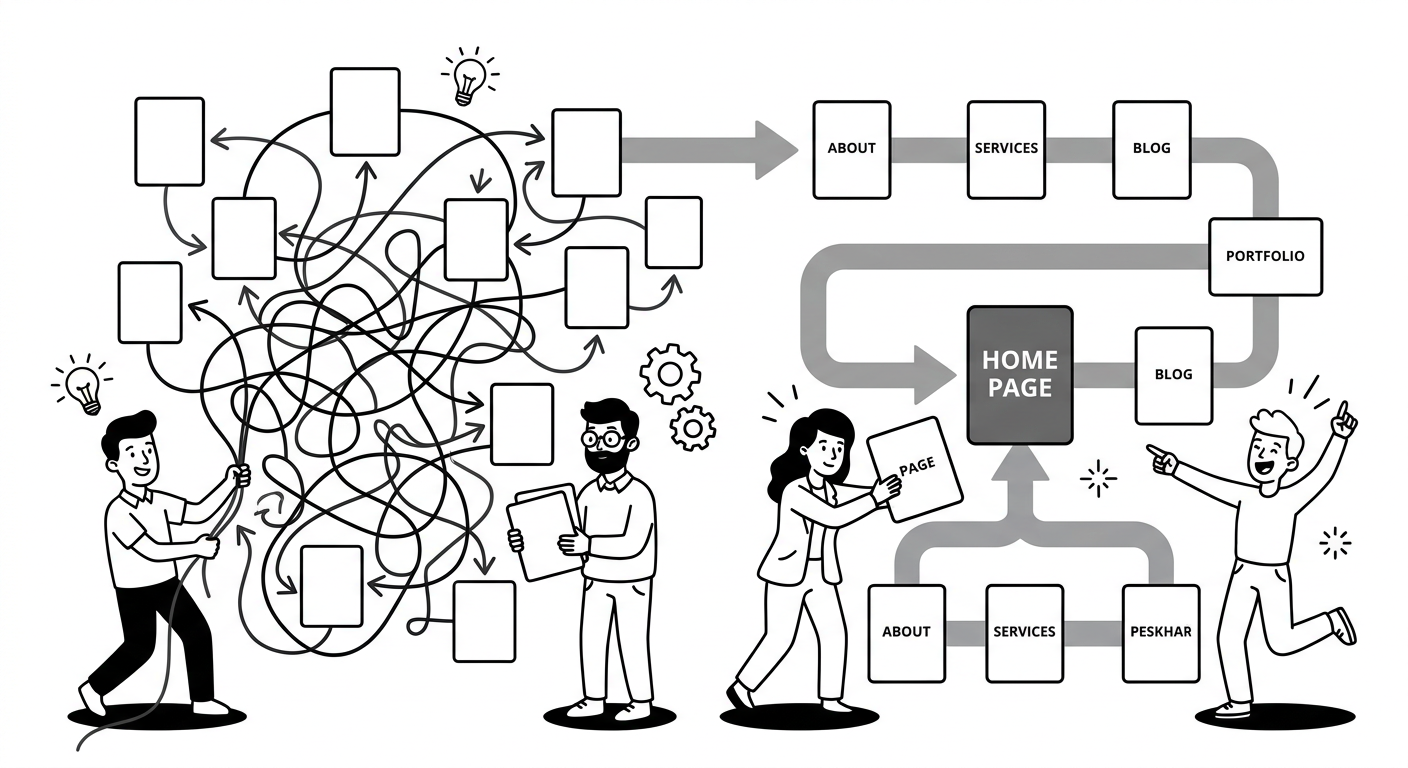
For a stronger content structure, pair technical findings with a review of page roles and internal links. Our walkthrough on building a smarter SEO sitemap shows how keyword mapping can prevent overlapping pages from competing against each other.
An Honest Recommendation for Each Agency Type
The right choice becomes simpler when we match the platform to the work we actually sell.
Choose Semrush when we need one broad operating system
Semrush is the most balanced choice when our agency handles technical SEO, keyword research, rank tracking, competitive analysis, and recurring client reporting from one environment. It is particularly useful for teams that want fewer logins and clear monitoring limits across a portfolio.
Choose Ahrefs when research drives our SEO retainers
Ahrefs is a strong choice when backlink intelligence, competitor research, content opportunities, and organic visibility analysis shape most of our recommendations. It supports a research-heavy approach where audits lead directly into content and authority work.
Choose Screaming Frog when technical precision is our differentiator
Screaming Frog is hard to beat for bespoke technical investigations. We should choose it when we have the skill to configure crawls, interpret the data, and convert detailed findings into prioritized developer tickets.
Choose Sitebulb when education closes deals
Sitebulb fits agencies that lead with audits, workshops, and strategy presentations. Its visual approach helps non-technical stakeholders understand why a problem matters, which can make implementation conversations much smoother.
Choose Marvlus when we need a faster front-end audit offer
Marvlus is useful when we want a free AI website audit that can surface SEO, content structure, topical opportunity, and AI-visibility gaps before committing specialist time to a deep crawl. It is most valuable as the first layer of a lead-generation and discovery workflow, followed by a deeper technical platform when the opportunity warrants it.
Questions Agencies Ask Before Switching Audit Platforms
Do we need more than one SEO audit platform?
Usually, yes, but not all at once. A fast prospecting tool plus one primary technical platform is enough for most small agencies, and we can add specialized tools only after the work demands them.
Is Screaming Frog better than Semrush for technical SEO?
Screaming Frog offers more crawl-level flexibility, while Semrush is easier for ongoing monitoring and broader reporting. We would use Screaming Frog for forensic work and Semrush for a more unified client-management workflow.
Can an audit tool replace an experienced SEO strategist?
No. Tools identify patterns and potential issues, but strategy requires business context, search intent analysis, prioritization, and sound judgment about trade-offs.
How often should we run client SEO audits?
We recommend a full baseline audit at onboarding, focused monthly monitoring for active priorities, and a deeper quarterly review. Frequent recrawls are useful only when they support a real implementation cycle.
What should a client-facing SEO audit include?
It should include the highest-impact issues, why they matter, recommended actions, expected effort, and the next review point. Keep raw crawl exports in the appendix or working files, not at the center of the client presentation.
Are AI-search checks worth including in an SEO audit?
Yes, especially for agencies selling AEO or GEO services. Include them as an extension of strong SEO fundamentals, such as clear content, strong information architecture, credibility signals, and useful structured data, rather than treating them as a separate magic formula.
Build an Audit Offer Prospects Can Understand
A better tool stack will not fix an unclear audit process. Start with a fast assessment, explain the few issues most likely to affect visibility or conversions, and use deeper platforms only when they help us deliver a clearer recommendation.
If we want to turn website reviews into more useful agency conversations, Marvlus can help us begin with a free AI website audit, uncover practical SEO and AI-visibility opportunities, and create a smarter next-step discussion with each prospect.
The Best Platform Is the One That Supports Action
The strongest platform is not automatically the one with the most checks, the largest crawl limit, or the flashiest dashboard. It is the one that helps our agency consistently move from evidence to priorities to measurable client work.
For many teams, that means using Semrush or Ahrefs as the broad suite, Screaming Frog or Sitebulb for deeper diagnosis, and a fast audit layer for lead generation and opportunity framing. Make the workflow repeatable, keep recommendations human, and let the platform serve the strategy, not replace it.