Most agencies do not need another vague promise to “get more leads.” They need a dependable system that attracts the right prospects, gives them a useful first win, and creates a clear path into a sales conversation.
For early-stage SEO, AEO, GEO, and digital marketing agencies, how to get more SEO leads comes down to making your offer easier to understand and easier to try. Your prospects are already doing more independent research before booking a call, so generic service pages and broad outreach rarely create enough trust on their own.
That matters because lead quality is more valuable than raw volume. HubSpot reports that 40% of marketers rank lead quality and marketing-qualified leads as their most important success metric, while nearly 70% say leads arrive later in the buying process after AI-assisted research. HubSpot’s 2026 marketing data supports a simple agency lesson: show your expertise before the sales call, not only during it.
Build a Lead System Before Chasing More Traffic
More traffic only helps when your agency has a relevant offer, a focused audience, and a follow-up path. We should build these pieces first so each campaign compounds rather than creating random inquiries.
| Pipeline layer | Primary job | Best early-stage asset | Core metric |
|---|---|---|---|
| Positioning | Make the agency memorable | Niche service page | Qualified visits |
| Lead capture | Give a prospect a first win | Free audit or assessment | Form completion rate |
| Nurture | Build confidence over time | Email sequence and proof | Booked calls |
| Sales | Convert fit into revenue | Discovery framework | Close rate |
Start with a narrow ideal client profile. “We help businesses grow online” is too broad to be believable. “We help B2B SaaS companies fix technical SEO and AI visibility gaps before they scale content” gives a prospect a clear reason to pay attention.
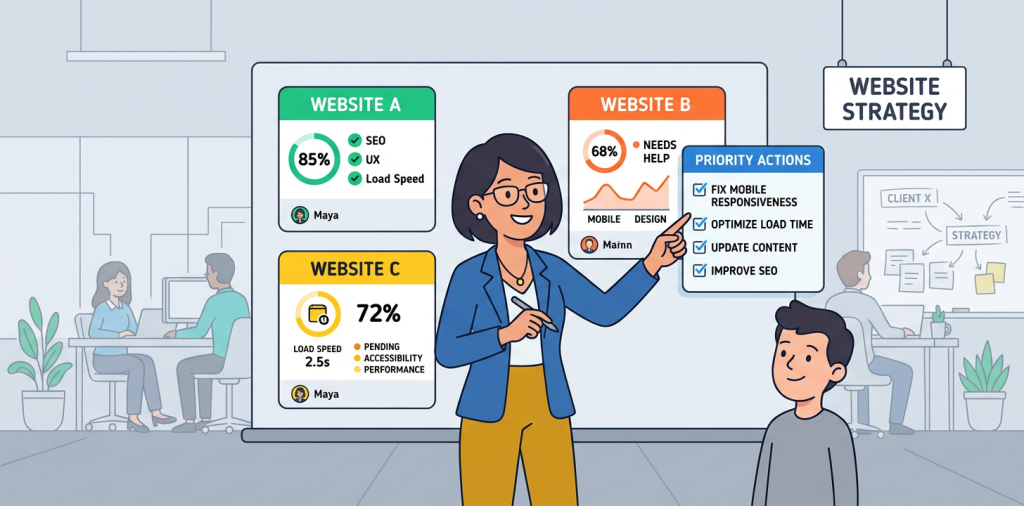
Then create one lead offer tied directly to that problem. An audit works well because it turns a complicated service into a visible list of gaps, priorities, and possible wins. The offer should answer one practical question: what is costing this prospect visibility, conversions, or qualified demand?

Make Your First Offer Specific Enough to Create Demand
A strong lead magnet solves a small but expensive problem. It should not try to give away your entire service, and it should make the next step feel logical rather than forced.
For example, a general “free SEO consultation” asks a busy prospect to guess why they need you. A “free AI visibility and technical SEO gap review for B2B SaaS sites” gives them a sharper reason to engage. The latter also helps us qualify the prospect before a call.
We recommend choosing one of these offer angles:
- A homepage and service-page conversion review
- A technical SEO priority audit
- A local visibility scorecard for multi-location businesses
- An AI visibility gap assessment for brands losing category awareness
- A competitor content gap review for one revenue-driving topic
The deliverable needs a fast, tangible outcome. Give prospects three to five prioritized findings, explain the business impact in plain language, and include one sensible next action. Save the deeper implementation plan for the conversation or proposal.
A free audit can be especially effective when it feels branded, useful, and consistent. Tools such as Marvlus help agencies offer AI-focused website reviews and white-label reports without building every assessment manually. Use the tool to open the conversation, then bring your agency’s expertise to interpreting the findings and planning the work.
Use Day 12 to Create a Small, Repeatable Content Engine
By Day 12, an early-stage agency should stop publishing disconnected posts and start building a content path around one commercial problem. The goal is not to publish daily. It is to make every useful asset lead naturally to the next one.
Pick one audience, one painful outcome, and one core service. If we serve ecommerce brands, our core topic might be “why category pages fail to bring qualified organic revenue.” From there, we can create a compact cluster:
- A service page explaining the outcome we help create.
- A problem-focused article that names common causes and fixes.
- A checklist or audit offer that diagnoses those causes.
- A short proof asset, such as an anonymized before-and-after breakdown.
- A follow-up email that shares one additional improvement opportunity.
This is progressive content strategy. Each piece meets prospects at a different confidence level, from “I think something is wrong” to “I need a partner to fix it.” It also keeps our message consistent across organic content, LinkedIn posts, outreach, and sales calls.
Build the supporting pages with clear internal paths. A useful resource on building topical authority with content clusters can help us organize pillar pages, supporting articles, and contextual links. For agencies offering AI visibility work, this primer on generative engine optimization helps prospects understand why the scope goes beyond traditional rankings.
Turn Website Visitors Into Conversations
A visitor should never have to wonder what happens after they raise their hand. Make the next action clear, low-friction, and tied to the page they are reading.
Use page-level offers instead of one universal button. An article about technical SEO should offer a technical review. A page about content gaps should offer a content opportunity assessment. This alignment improves relevance and tells us what the prospect cares about before we speak with them.
Keep forms short, but qualify intelligently
Ask for only the details that improve the next interaction:
- Name and work email
- Company website
- Team size or monthly traffic range
- Main growth goal
- Biggest obstacle
Avoid using the form as a discovery call replacement. We can learn the rest in conversation. Too many required fields add friction and create lower completion rates.
Show proof close to the action
Place short proof statements beside the form or booking button. Strong proof includes a recognizable niche, a measurable improvement, or a clear description of the work completed. If client confidentiality limits specifics, use an anonymized mini-story that explains the problem, action, and outcome.
Respond while intent is high
Speed matters, but relevance matters more. Send an immediate confirmation that explains what the prospect will receive, then send a helpful follow-up with one observation about their submitted site. Even a brief personal note separates us from agencies that let new leads sit in a generic automation sequence.
Create Outreach That Feels Useful, Not Automated
Outbound can work for agencies when we begin with evidence instead of a pitch. The best first message is usually a brief observation tied to the prospect’s business, followed by one relevant offer.
We can use this structure:
We noticed that your product comparison pages do not link to the related use-case pages, which may be limiting topical depth and visitor flow. We put together a short priority review with three possible fixes. Would it be useful if we sent it over?
The message works because it is short, specific, and easy to decline. Do not write a long explanation of every service we offer. The goal is permission to share something valuable, not to close a deal in an inbox.
Build small prospect lists around a shared trigger. New funding, a redesigned website, expanding locations, a weak competitor comparison page, or a visible content gap can all create a valid reason to reach out. Track the trigger, message, response, and booked-call rate so we can improve based on evidence rather than intuition.
Measure the Pipeline, Not Just the Lead Count
A lead count can look healthy while revenue stays flat. We need to see which channels and offers create conversations with companies that match our ideal client profile.
Track these numbers every week:
- Qualified leads by source
- Audit completion rate
- Lead-to-call rate
- Call-to-proposal rate
- Proposal-to-client rate
- Average sales cycle length
- Revenue by offer and acquisition source
HubSpot notes that 30% of marketers still view lead generation as a top challenge, even as more leads arrive better informed. That is why measurement needs to focus on fit and progression, not vanity metrics. The same 2026 data also shows that website, blog, and SEO work remain the top ROI-driving channel for marketers, which makes a focused agency content system worth improving over time.
Fix the Weakest Stage First
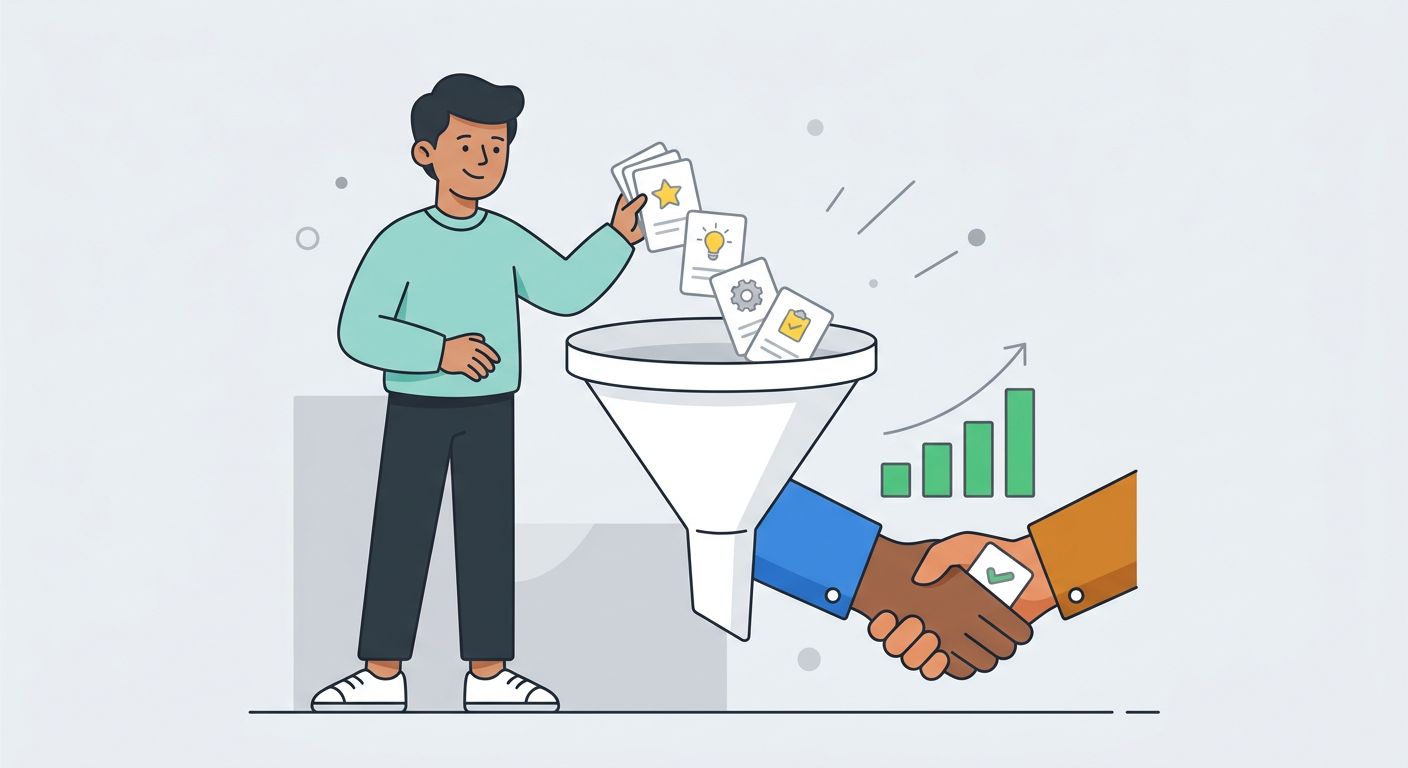
The fastest growth often comes from fixing one bottleneck, not launching five new campaigns. Review the pipeline monthly and identify the stage with the biggest drop-off.
If qualified traffic is low, tighten your niche and publish more problem-specific content. If form submissions are low, strengthen the offer and place it closer to the relevant page topic. If calls are happening but proposals are not closing, improve discovery, packaging, proof, or pricing clarity.
For AI-oriented agency services, technical accessibility also matters. This resource on making websites crawlable for ChatGPT is useful when a prospect needs a clear baseline before investing in broader visibility work. The key is to connect the technical finding to a commercial impact that decision-makers care about.
Frequently Asked Questions
How long does it take to get SEO leads?
Most agencies can create early conversations within a few weeks when they pair a focused offer with targeted outreach. Organic content usually takes longer, but it becomes more valuable as related assets, proof, and internal paths accumulate.
Should we target one industry or serve several?
For a newer agency, one primary industry or business model usually creates clearer positioning and stronger proof. We can expand later once the core offer has repeatable results and a reliable sales process.
Are free audits worth the effort?
They are worth it when the audit is standardized, useful, and designed to qualify prospects. Avoid custom reports that consume hours for businesses that do not fit your pricing, service model, or capacity.
How many leads should a small agency aim for each month?
Set a target based on your close rate and capacity, not an arbitrary volume goal. If we close one in five qualified calls and need two new clients, ten genuinely qualified calls matter more than one hundred weak inquiries.
Should we use paid ads before organic content is working?
Paid campaigns can validate an offer quickly, especially for audit landing pages and high-intent services. Still, we should first confirm that the page, offer, follow-up, and sales conversation can convert, or ads will only make an unclear process more expensive.
What makes an SEO lead qualified?
A qualified lead has a real business need, a site or growth goal that matches our expertise, access to a decision-maker, and enough potential value to support our pricing. Traffic alone does not make a company a fit.
Put Your Audit Offer to Work
If we want more qualified conversations without building a complicated tool from scratch, we can use Marvlus to add a free AI website audit to our lead flow. Give prospects a useful first assessment, deliver a polished branded report, and use the findings to guide a more relevant sales conversation.
Build Trust Before You Ask for the Sale
The most reliable way to get more SEO leads is to make expertise visible before a prospect books time with us. A narrow audience, a clear diagnostic offer, a helpful content path, and disciplined follow-up create a pipeline that gets stronger with every campaign.
Start small and improve one stage at a time. When our marketing gives prospects a meaningful first win, our agency stops competing on generic promises and starts earning conversations with people who already understand the value of solving the problem.