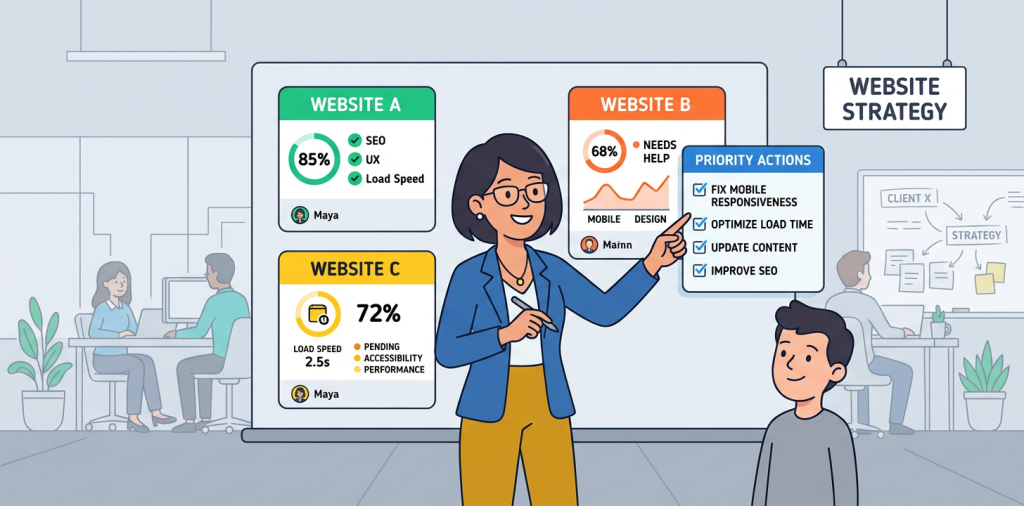
A growing agency rarely loses momentum because the team lacks talent. More often, it loses momentum because leads, proposals, follow-ups, and client context live across inboxes, spreadsheets, chat threads, and someone’s memory.
That’s why CRM for digital agencies should be treated as an operating system, not another admin tool. A good setup gives us a clear view of who needs a reply, which opportunities are moving, where onboarding is stuck, and which client relationships need proactive attention.
Why Agencies Need a CRM Built Around Relationships
A CRM gives agencies one reliable place to manage revenue conversations and client history. It helps us replace reactive follow-up with a consistent process that makes prospects and clients feel seen.
This matters because client longevity is tied to trust. A 2025 ANA and 4As study found average client-agency relationships reached about seven years, while media-only agencies averaged 3.7 years. Digital agencies can use a CRM to create the regular communication, documented progress, and executive visibility that support longer partnerships.
For an early-stage SEO, AEO, GEO, or digital marketing agency, the goal is not to recreate an enterprise sales department. The goal is much simpler: make sure no qualified lead waits too long, no active proposal goes cold unnoticed, and no client has to ask us for an update we should have shared first.
| CRM Need | What It Solves | Simple Agency Outcome |
|---|---|---|
| Lead pipeline | Lost inquiries | Faster follow-up |
| Contact timeline | Scattered context | Better sales calls |
| Task reminders | Missed next steps | Fewer stalled deals |
| Client health notes | Surprise churn | Proactive account care |
| Reporting links | Hard-to-prove value | Clearer conversations |
The Non-Negotiable CRM Fields for Agency Sales
The best agency CRM tracks commercial context, not just names and email addresses. We need enough information to qualify opportunities quickly and personalize each conversation without turning data entry into a full-time job.
Start with these fields:
- Company and primary contact: Include role, email, phone, website, and the lead source.
- Service interest: SEO, paid media, AEO, GEO, content, web design, analytics, or a bundled engagement.
- Current situation: Their main obstacle, existing provider, timeline, internal decision-makers, and estimated monthly budget.
- Sales stage: New lead, qualified, discovery booked, audit shared, proposal sent, verbal yes, won, lost, or nurture.
- Next action and due date: Every open deal needs one owner and one specific next step.
- Proof of value: Link the audit, proposal, call notes, example deliverables, and client-facing reports.
- Client health notes: Once a deal closes, record goals, wins, risks, renewal date, and expansion opportunities.
The field that matters most is the next action. If a record does not tell us what happens next and who owns it, the CRM is functioning as storage rather than a sales system.
Build a Useful System by Day 14, Not a Perfect One
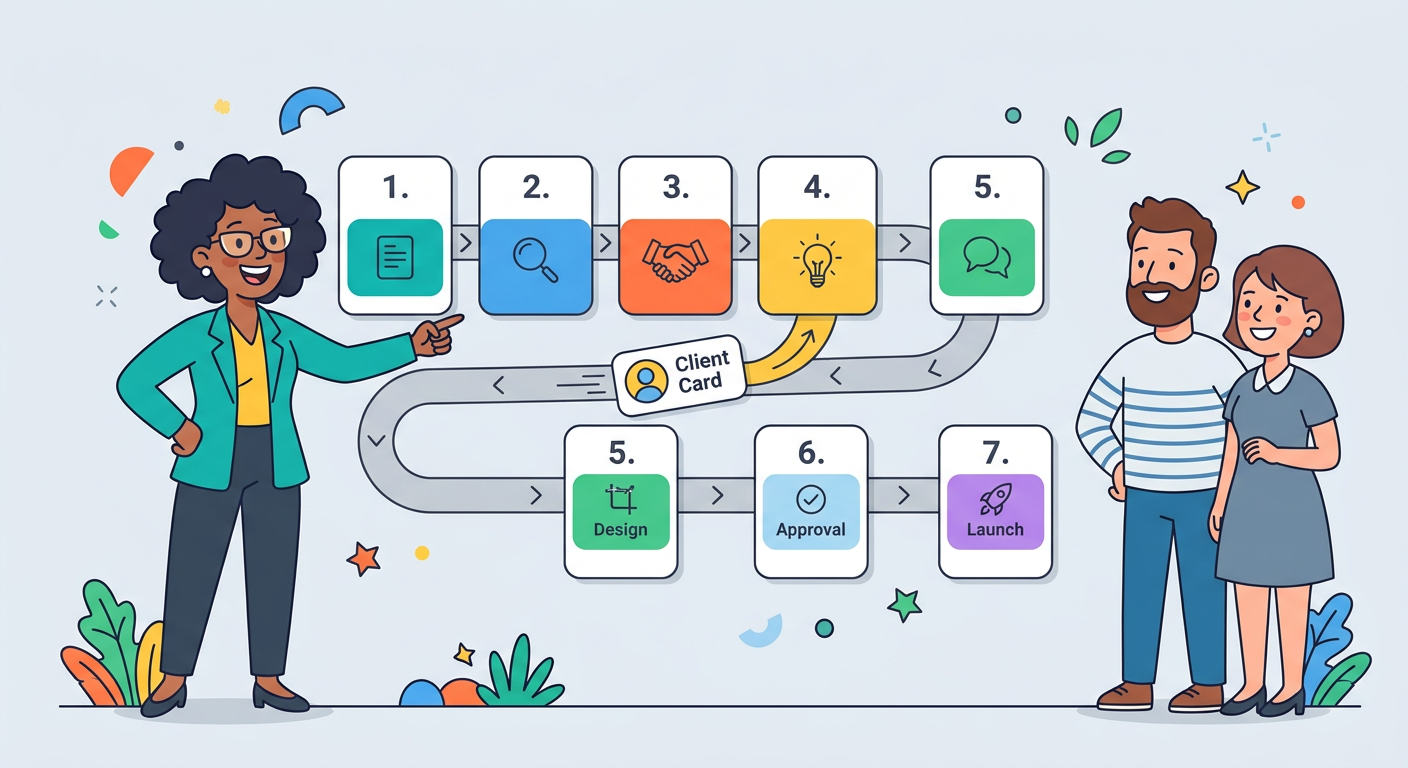
A lean CRM can be valuable within two weeks if we build it around daily agency habits. Early-stage teams should prioritize repeatability over complex automation, because a simple system used every day beats a sophisticated one that nobody maintains.
Days 1 Through 3: Create One Pipeline
Use a single new-business pipeline first. Avoid separate boards for referrals, website leads, partners, and outbound prospects until volume genuinely requires it.
A practical sequence is:
- New lead
- Contacted
- Qualified
- Discovery booked
- Audit or findings shared
- Proposal sent
- Won, lost, or nurture
Define what qualifies a lead before it moves forward. For example, an SEO prospect is qualified only after we know the website, decision-maker, primary growth goal, rough budget range, and desired start date. That discipline keeps the pipeline honest.
Days 4 Through 7: Set Follow-Up Rules
Every stage should trigger a clear behavior. We recommend responding to inbound leads during the same business day, assigning a next step before a call ends, and creating a follow-up task whenever a proposal is sent.
A simple cadence works well: a helpful recap after discovery, a check-in two business days after the proposal, another message a week later with a relevant insight, then a move into a low-pressure nurture sequence. The point is not to chase people endlessly. It is to remain useful and visible while the buyer decides.
Days 8 Through 10: Connect Sales to Delivery
The handoff from sales to account delivery is one of the biggest trust moments in any agency relationship. When a deal is marked won, automatically or manually create an onboarding checklist with the signed scope, success metrics, access requirements, stakeholder list, first reporting date, and the next client meeting.
This is also where our free SEO website audit workflow can support a more informed handoff. The audit gives the sales and delivery teams a shared starting point, so the first strategy discussion begins with relevant findings instead of generic discovery questions.
Days 11 Through 14: Create a Weekly Revenue Review
By the end of the second week, schedule a 30-minute review at the same time every week. Look at open opportunities, pipeline value by stage, deals without a next action, proposals older than seven days, client renewal dates, and accounts with visible risks.
For example, if five proposals are stuck in the same stage, that is not a motivation problem. It is a process signal. We may need clearer scope options, stronger proof, better qualification, or a more direct proposal follow-up.
Match the CRM to Your Agency’s Actual Workflow
The right platform depends on where the agency feels friction. We should choose the smallest tool that supports the sales motion we have, while leaving enough room for the next stage of growth.
| Platform | Best Fit | Tradeoff | Starting Price |
|---|---|---|---|
| HubSpot | Agencies needing marketing and sales in one system | Can become complex as needs grow | Free tools, paid Sales Hub plans available |
| Pipedrive | Small teams focused on deal flow and follow-up | Less delivery-focused out of the box | From $14 per user monthly, billed annually |
| ClickUp | Agencies that want sales and work management together | Requires careful setup to avoid clutter | Free plan available |
| Marvlus | Agencies using branded audits to generate and qualify leads | Best for audit-led growth rather than broad enterprise CRM needs | Seven-day trial available |
HubSpot is a strong fit when we want CRM records connected to forms, email activity, and broader marketing operations. Its free tools can work for a new agency, while paid Sales Hub plans add deeper automation as the process matures.
Pipedrive is often easier for a small agency whose main need is a clean deal board, activity reminders, and sales discipline. Its Lite plan starts at $14 per user per month when billed annually, making it a straightforward option for founder-led sales.
ClickUp can make sense if the team already runs client work there and wants one shared environment. It offers a free plan and positions its Unlimited plan for small teams, but we should keep sales records separate from detailed production tasks to prevent an overloaded workspace.
For an audit-led agency, Marvlus agency tools are a useful fit when the priority is capturing leads from white-label AI and SEO audits, then organizing outreach around what those prospects already need. That creates a more relevant first conversation than a generic contact form can provide.
Use the CRM to Protect Retention, Not Only Win Deals
A CRM should stay useful after the contract is signed. Its real value comes from helping us keep promises, prepare for key conversations, and spot account risks before they become cancellation notices.
A 2025 AgencyAnalytics benchmark report found that 70% of agency leaders view client reporting as critical to retention. That makes reporting data, meeting notes, and next-step commitments valuable CRM context, not separate operational clutter.
For every active client, add these recurring checkpoints:
- A 30-day onboarding review to confirm access, priorities, and early progress.
- A monthly results conversation with decisions and follow-up items recorded.
- A quarterly planning session focused on new opportunities, risks, and changing business priorities.
- A renewal reminder 90 days before the agreement ends.
- A relationship note after leadership changes, major launches, budget shifts, or performance volatility.
We can also create a simple health status: green, yellow, or red. Green accounts are engaged and progressing. Yellow accounts need attention because of slow approvals, unclear expectations, or weak results. Red accounts have an active risk, such as a renewal concern, prolonged silence, or a strategic mismatch. The label is less important than a documented action plan.
Common CRM Mistakes Agencies Can Avoid
The biggest CRM mistakes come from overbuilding too early or treating the system as a surveillance tool. We get better results by making it easy for people to do the right thing at the right time.
First, do not create 30 pipeline stages. A stage should represent a meaningful change in deal certainty, not every email we send. Second, do not ask the team to fill out fields nobody uses in meetings. Third, do not rely on one founder’s inbox as the full client record. If that person is away, the team should still understand the opportunity, relationship history, and next action.
Finally, avoid measuring activity without outcomes. Fifty logged calls mean very little if proposals are aging, qualified leads are waiting, or clients are unclear about the value we created. Track the few numbers that guide better decisions: response time, discovery-to-proposal rate, proposal-to-close rate, average sales cycle, renewal rate, and expansion revenue.
Frequently Asked Questions
Do small digital agencies really need a CRM?
Yes, even a one-person agency benefits from a CRM once leads and clients no longer fit comfortably in one inbox. It creates a dependable follow-up habit and preserves context as the business grows.
Should we use one CRM for sales and client management?
Usually, yes, but use separate views or pipelines for prospects and active clients. Sales needs deal stages and follow-up tasks, while account management needs health notes, renewal dates, meeting commitments, and expansion opportunities.
How long does CRM setup take for an agency?
A useful first version can take one to two weeks. Start with one pipeline, essential fields, a few task reminders, and a weekly review before adding integrations or advanced automation.
What is the best CRM for an SEO agency?
The best choice depends on how the agency wins business. Pipedrive is a strong option for a focused sales pipeline, HubSpot suits agencies combining inbound marketing and CRM, and an audit-led platform can fit teams using personalized findings to begin sales conversations.
Can a project management tool replace a CRM?
It can work at very low volume, but it often becomes messy once the agency manages active delivery and new business simultaneously. Dedicated CRM features such as deal stages, activity history, and lead follow-up are designed for commercial relationships.
What should we do with leads that are not ready to buy?
Move them into a nurture stage with a future follow-up date and a reason for waiting. Share genuinely useful material, such as a site finding, a market observation, or a relevant case example, rather than sending generic reminders.
Build a Pipeline Your Team Can Actually Use
A CRM will not close deals or save accounts by itself. What it can do is make good agency habits visible, repeatable, and much harder to forget.
Start lean, review the pipeline every week, and keep improving the workflow based on where leads and clients lose momentum. When every relationship has an owner, a clear history, and a next action, we spend less energy chasing details and more energy doing the work clients hired us to do.
Put Your Audit Leads Into a Clearer Sales Process
If we want to turn website visitors into better-qualified agency conversations, Marvlus combines white-label AI and SEO audits with lead capture and pipeline organization. Start a seven-day trial, place a branded audit on a high-intent page, and give every new prospect a useful reason to talk with us.