
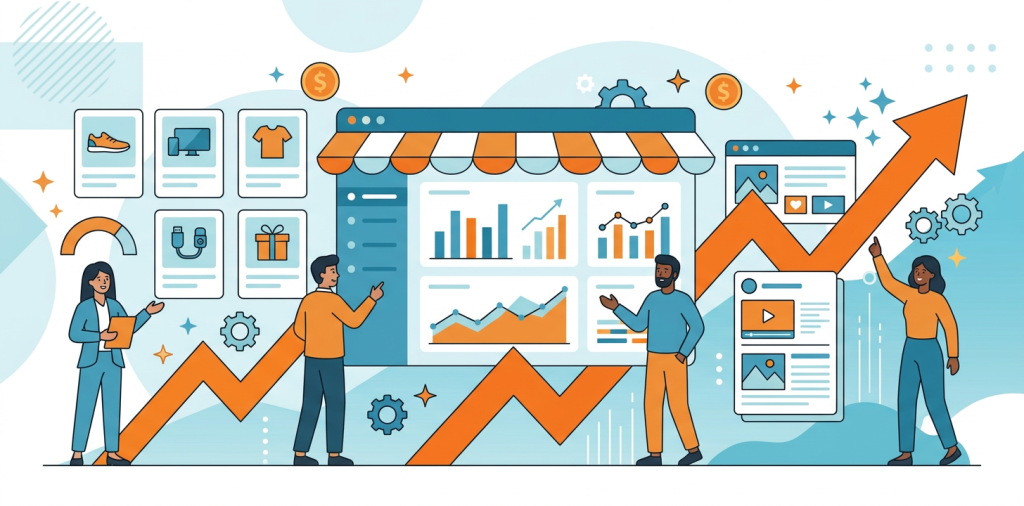
What is ecommerce content strategy for growth, and why does it matter so much? It is the plan that connects your product pages, blog content, category pages, and SEO efforts into one system that attracts visitors and turns them into buyers. Done well, it helps you earn more rankings, more clicks, and more revenue without relying only on paid traffic.
The good news is you do not need a giant team to make it work. You need a clear structure, a few high-value content types, and a process that keeps improving what already exists.
What Ecommerce Content Strategy for Growth Really Means
At its core, an ecommerce content strategy is about matching the right content to the right stage of the buying journey. Someone comparing products needs different content than someone searching for “best running shoes for flat feet,” and both need different content than a shopper ready to buy today.
A strong strategy supports discovery, trust, and conversion at the same time. That means your content should not just bring in traffic, it should help visitors choose confidently.
The three jobs your content must do
- Attract qualified traffic from search and AI platforms.
- Educate shoppers so they understand the value of your products.
- Convert visitors with clear next steps, internal links, and persuasive page design.
Build Your Growth Foundation First
Before you create more content, make sure your site can actually support growth. Many stores publish content while ignoring technical issues, weak internal linking, or thin product pages, which limits results.
Start with a website audit, then fix the basics that affect crawlability, speed, and user experience. Core Web Vitals, duplicate content, indexation issues, broken links, and messy navigation can quietly hold back your entire store.
Focus on these core elements
- Strong category page structure
- Clean product page copy
- Fast mobile performance
- Logical internal linking
- Clear canonicals and filtering rules
- Consistent metadata and headings
If your foundation is weak, content will underperform no matter how good it is.
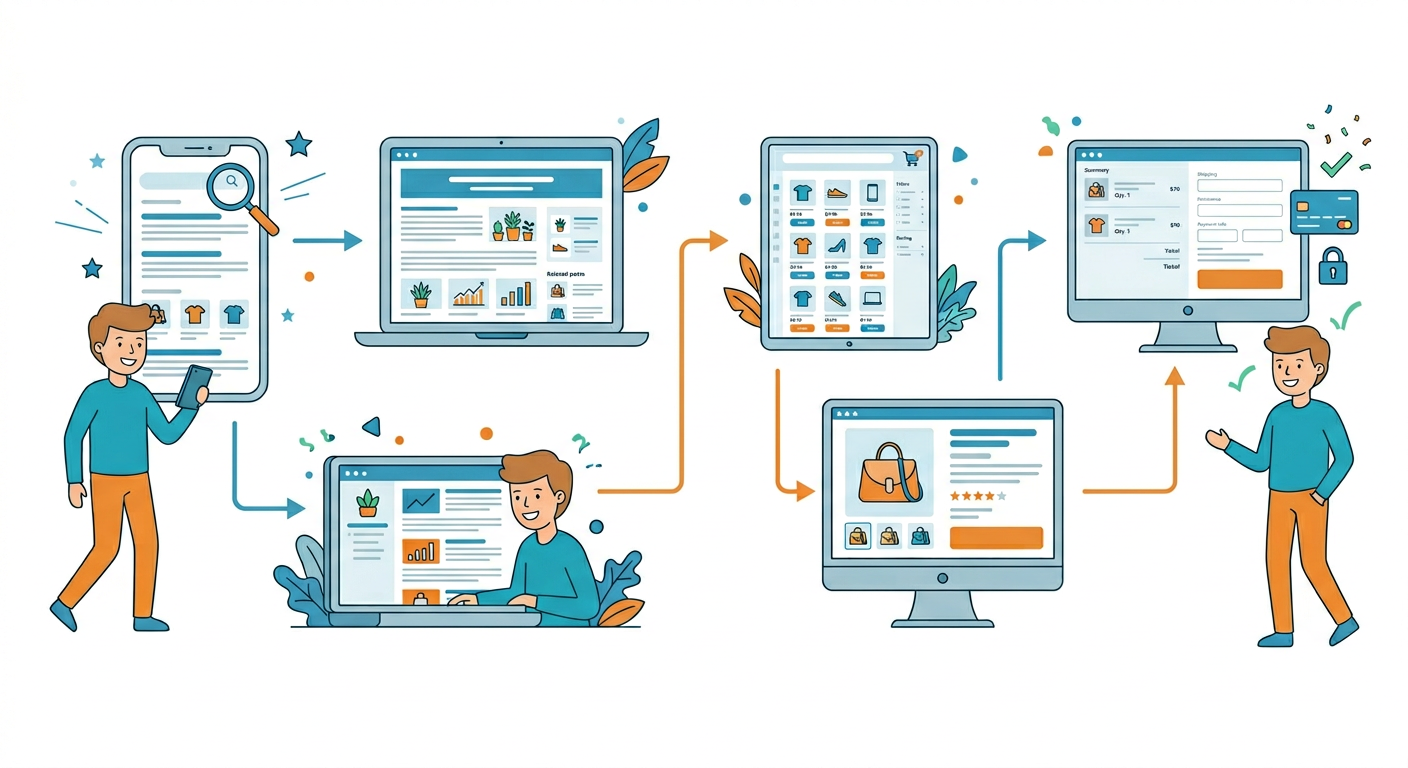
Map Content to the Buyer Journey
The easiest way to build a scalable content strategy is to organize content by intent. This keeps you from publishing random articles that never support sales.
Think in three layers.
Top of funnel content
This content attracts people who are researching. Examples include guides, comparisons, definitions, and problem-solving articles. These pages are ideal for reaching new audiences and feeding them into your site.
Middle of funnel content
This content helps shoppers compare options and narrow choices. Product roundups, buying guides, feature comparisons, and use-case content work especially well here.
Bottom of funnel content
This is where product pages, category pages, FAQs, reviews, and shipping or returns pages matter most. The goal is to remove hesitation and make purchase decisions easy.
Create Content That Supports Revenue, Not Just Traffic
Traffic alone does not pay the bills. The best ecommerce content strategy for growth turns attention into action.
That means every content piece should have a purpose. A blog post should point to a relevant category page. A category page should help visitors quickly understand the product range. A product page should answer objections before they become exits.
High-impact content types to prioritize
- Buying guides
- Product comparison pages
- Category page copy
- Educational blog posts
- FAQ hubs
- Seasonal landing pages
- Use-case pages
- Troubleshooting content
If you are a smaller team, start with the pages that already have commercial intent. These usually produce the fastest lift.
Use Internal Linking to Move Visitors Forward
Internal linking is one of the most underrated growth levers in ecommerce. It helps search engines understand your site and helps users move from education to purchase.
For example, a guide about “how to choose a water bottle” should link to category pages, best-seller pages, and relevant product collections. That creates a path instead of a dead end.
A simple internal linking rule
Every major informational page should link to at least one commercial page, and every commercial page should link back to related educational content when helpful. That way, your content ecosystem supports discovery and conversion at the same time.
Optimize Product and Category Pages for Search
A lot of stores treat product pages like inventory listings. That is a missed opportunity.
Product pages should answer questions, build trust, and clearly communicate value. Category pages should do more than show products, they should help shoppers understand selection, fit, and differentiation.
What to improve on product pages
- Unique title tags and meta descriptions
- Clear benefit-driven copy
- Helpful FAQs
- Reviews and social proof
- Strong calls to action
- Detailed specifications and sizing info
- Rich media like images, videos, and demos
What to improve on category pages
- Short intro copy with keyword relevance
- Helpful filters and sorting
- Internal links to top guides
- Explanations of product differences
- Copy that matches search intent
This is where many stores win big SEO gains without publishing a ton of new content.
Refresh Content Before You Multiply It
Content decay is real. Pages that used to rank can lose visibility as competitors improve their pages, search behavior changes, or your own site gets outdated.
A smart ecommerce content strategy for growth includes regular updates. Refresh old guides, improve thin content, add new products, update comparisons, and fix broken links. This is often faster and cheaper than starting from scratch.
Refresh priorities
- Pages with declining traffic
- Pages ranking on page 2 or 3
- Content with outdated products or pricing references
- Pages with strong impressions but low clicks
- High-value pages with poor conversion rates
Make AI Search Visibility Part of the Plan
Search is changing fast, and shoppers are increasingly using AI tools to discover brands, compare products, and ask purchase-related questions. That means your content should be easy for both people and AI systems to understand.
Use clear headings, concise answers, structured FAQs, and simple language. Strong topical coverage, specific product details, and well-organized pages can help your content show up in AI-assisted discovery experiences like ChatGPT and Gemini.
What helps AI visibility
- Direct answers near the top of pages
- Clear entity names and product details
- FAQ sections with natural language questions
- Strong topical consistency across related pages
- Helpful summaries and concise explanations
Measure the Right Metrics
If you only track traffic, you may miss the real story. Growth comes from the combination of rankings, clicks, engagement, and conversions.
Watch the pages that drive assisted sales, not just last-click conversions. In ecommerce, many content pieces help a customer buy later, even if they were not the final page visited.
Metrics to watch closely
- Organic sessions
- Ranking improvements
- Click-through rate
- Add-to-cart rate
- Revenue from organic landing pages
- Conversion rate by content type
- Assisted conversions
A Simple 30-Day Execution Plan
If you want momentum fast, do not try to do everything at once. Start with a focused plan.
Week 1
Audit your top pages, identify content gaps, and find underperforming product and category pages.
Week 2
Update key commercial pages, improve copy, and strengthen internal links.
Week 3
Publish one or two high-intent guides that support your best-selling products.
Week 4
Review performance, refresh weak spots, and plan the next content batch.
FAQs
What is the best ecommerce content strategy for growth?
The best strategy combines SEO-focused educational content with optimized category and product pages. It should attract search traffic, guide shoppers, and improve conversions.
How many content types should an ecommerce store publish?
Start with a small mix: buying guides, comparison pages, category copy, FAQs, and product page improvements. You do not need dozens of formats to see results.
Should I focus on blog content or product pages first?
If your product and category pages are weak, fix those first. Blog content works best when it supports commercial pages and helps move shoppers toward purchase.
How often should I update ecommerce content?
Review important pages every few months, and refresh them sooner if traffic drops, products change, or competitors outrank them.
Can small ecommerce brands compete with big retailers?
Yes. Smaller brands often win by being more specific, more useful, and more focused on niche intent. Strong content strategy can create an edge even with limited resources.
How does content help conversions?
Good content reduces uncertainty. It answers questions, builds trust, and directs visitors to the next best action, which makes buying easier.
Grow Faster With a Smarter Content System
If you want ecommerce growth, stop thinking in isolated posts and start thinking in systems. The stores that win are the ones that connect content, SEO, and conversion into one repeatable engine.
That is exactly where a structured audit and a clear content plan can help. If you want to uncover gaps, improve rankings, and turn more organic visitors into buyers, take a closer look at what your site is already doing, then build from there. Learn more at AuditSky.
Conclusion
A strong ecommerce content strategy for growth is not about publishing more for the sake of it. It is about creating the right content, supporting the right pages, and making it easier for shoppers to trust you and buy.
Start with your foundation, tighten your internal linking, improve your highest-value pages, and refresh old content regularly. That is how you build sustainable growth without wasting time or budget.