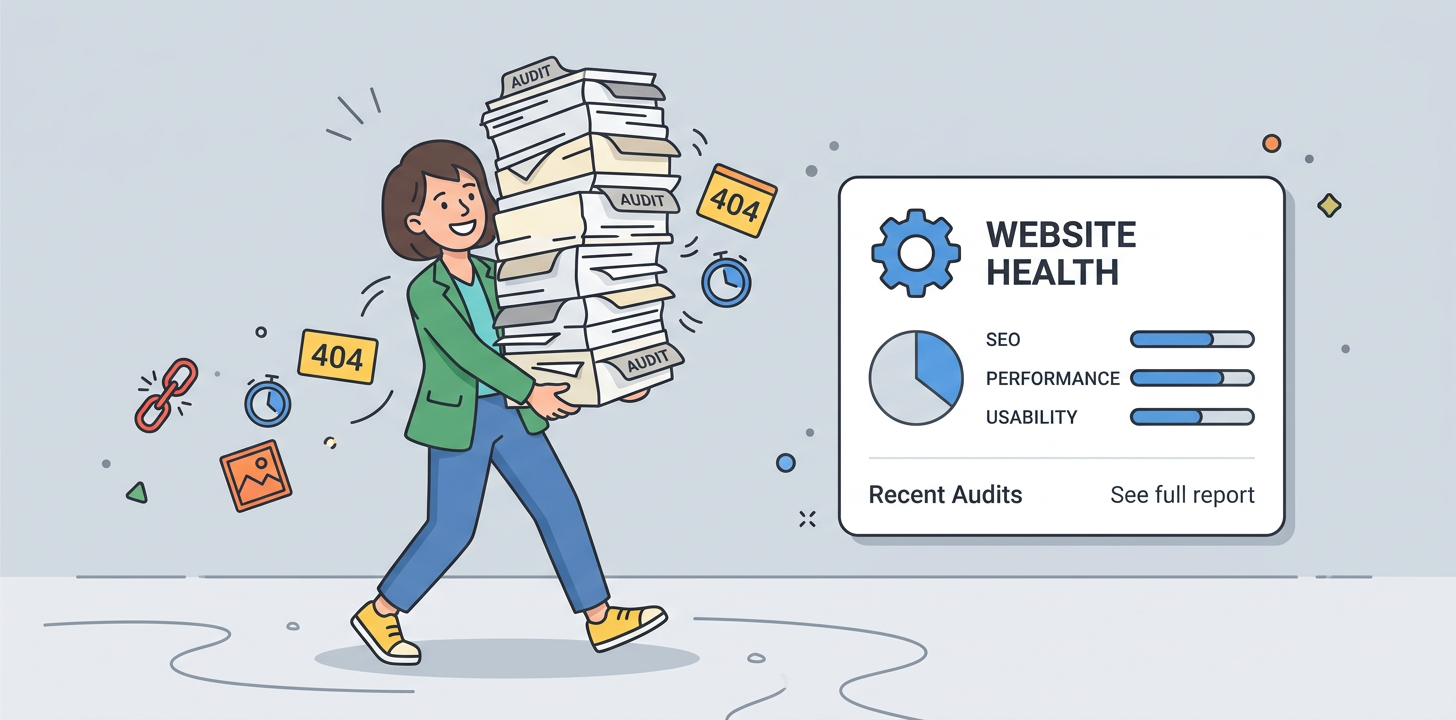
A thorough audit can win trust, clarify priorities, and open the door to a long-term client relationship. But when every audit begins with tabs, exports, spreadsheets, screenshots, and a blank presentation deck, the process can quietly damage the agency delivering it.
The biggest problems with manual SEO audits are not simply that they take too long. They create inconsistent recommendations, delay follow-up, restrict how many prospects we can help, and force senior strategists to spend high-value hours assembling evidence instead of interpreting it. For early-stage SEO, AEO, GEO, and digital marketing agencies, that tradeoff can make growth feel much harder than it should.
A 2026 Keyword.com survey found that 87% of respondents use AI regularly or more broadly in SEO work, yet only 1% describe their work as fully automated. That is the right framing for agencies: automate repetitive collection and first-pass organization, then keep experienced people accountable for judgment.
Where Manual Audits Create the Most Friction
Manual audits become costly when the same repeatable work happens for every prospect, every client, and every reporting cycle. The issue is not human review itself. The issue is using human expertise for work that should already be structured, collected, and prioritized.
| Audit Stage | Manual-First Workflow | Scalable Workflow | Agency Impact |
|---|---|---|---|
| Data collection | Multiple exports | Standardized intake | Faster baseline |
| Issue finding | Tab-by-tab review | Automated detection | Fewer missed items |
| Recommendations | Rewritten each time | Prioritized templates | More consistency |
| Client delivery | Static deck assembly | Branded shareable report | Faster follow-up |
| Quality control | Late-stage fixes | Review checkpoints | Better accuracy |
Senior Time Gets Buried in Assembly Work
When a senior SEO spends hours gathering crawl results, checking page templates, documenting metadata, reviewing internal links, and formatting screenshots, we are paying strategist-level rates for production work. That can be acceptable for a complex enterprise engagement, but it is rarely sustainable for every discovery call or smaller retainer.
The workflow gets even more expensive when the client expects visibility across Google and AI answer tools. A manual audit now has to account for technical health, content structure, brand clarity, topical coverage, and how easily platforms can interpret the site. That is why teams need a repeatable system, not a longer checklist.
Inconsistency Makes Recommendations Hard to Defend
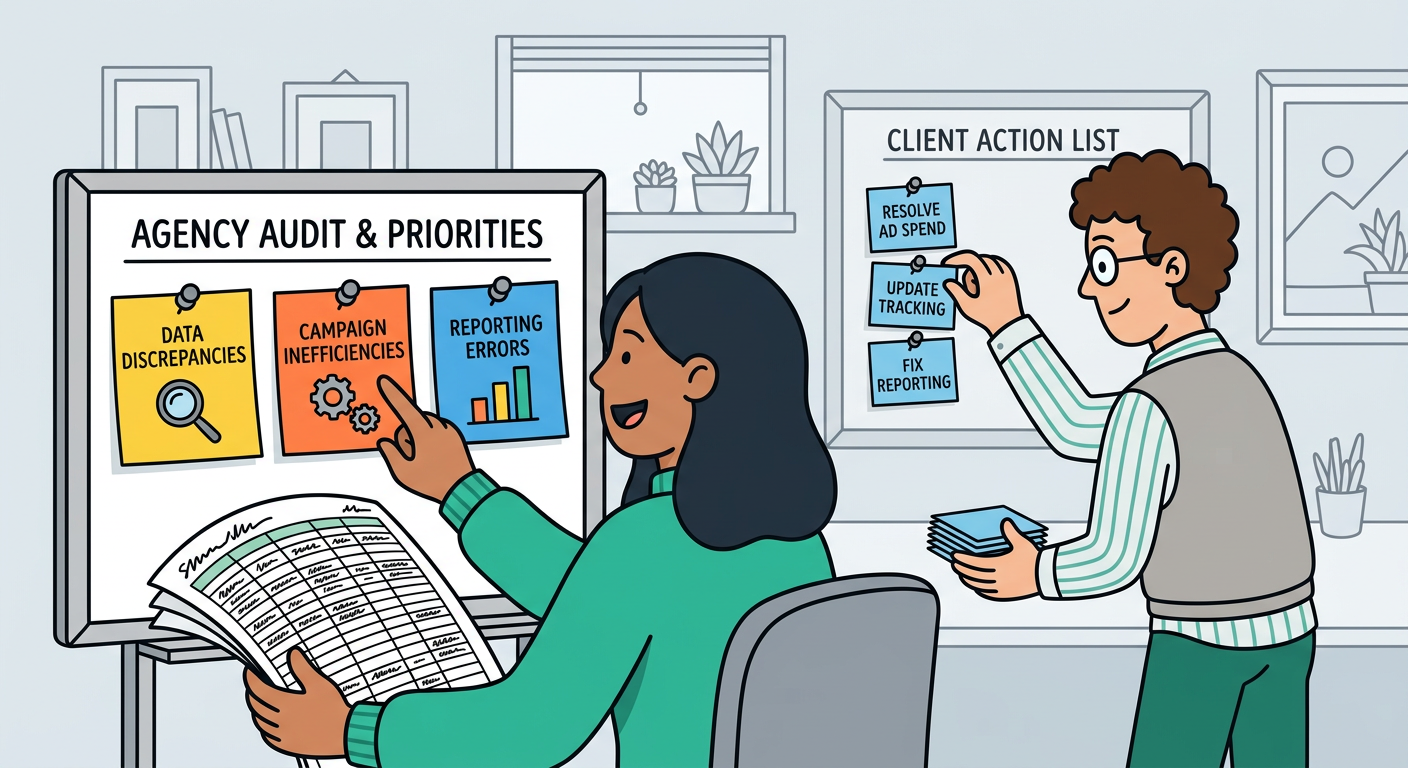
Two capable analysts can review the same website and produce very different audit documents. One may flag thin service pages, another may focus on broken internal links, and a third may prioritize entity clarity. All three observations may be valid, but clients need to understand why one action comes first.
A structured scoring and prioritization model gives every account the same starting point. We can still apply our judgment, but we are no longer relying on memory, personal habits, or whatever happened to stand out during a late-night review.
The Delay Kills Sales Momentum
An audit is often strongest when it reaches a prospect while their problem still feels urgent. If it takes a week to collect data, build slides, and get internal approval, the prospect may have lost interest, chosen another provider, or simply forgotten why they booked the call.
Fast does not mean careless. It means we create a credible baseline quickly, use it to start a useful conversation, and reserve deep manual analysis for qualified opportunities with real fit and buying intent.
The Hidden Margin Problem Behind Manual SEO Audits
Manual audits hurt margins because effort rises almost linearly with lead volume. More interest should create more opportunity, but a manual process can turn success into an operational backlog.
Research from Fluent across 104 marketing agencies found that only about one-third of reporting time goes toward actual insight generation. The remainder is consumed by extracting data, cleaning it, formatting reports, creating deliverables, and review work. Audit production has the same pattern when every document is built from scratch.
For an early-stage agency, the math gets real quickly. Imagine we receive 12 qualified inbound requests per month and spend four hours preparing each audit. That is 48 hours before discovery calls, proposals, onboarding, delivery, or client communication. If half of those prospects never become clients, we have still spent more than a full workweek on pre-sale production.
More Headcount Does Not Fix a Weak Process
Hiring another analyst may relieve pressure temporarily, but it can also multiply inconsistency. Without a documented sequence for what gets checked, how issues are scored, and what recommendations are included, new team members need extensive review. Founders stay stuck as the final quality gate.
A stronger approach is to separate the work into three layers:
- Baseline collection: Gather repeatable technical, content, and visibility signals in a consistent format.
- Strategic interpretation: Use experienced judgment to identify the few issues most likely to affect growth.
- Client communication: Translate findings into plain priorities, business impact, ownership, and next steps.
This keeps specialists focused on the part clients actually value, deciding what matters and why.
Static PDFs Create a Follow-Up Burden
A beautiful PDF can make a good first impression, but it can be difficult to revisit, update, or use during follow-up. When a prospect asks, “What should we fix first?” the team may need to reopen old files, reproduce evidence, and rebuild the narrative.
Shareable, living reports reduce that drag. They also make it easier to connect recommendations to ongoing work, particularly when an agency is helping clients improve topical coverage or strengthen their topical authority over several months.
Why AEO and GEO Make the Manual Method Even Harder
Traditional audits already involve many moving parts. Adding AI visibility introduces new questions about content clarity, entity consistency, answer-ready formatting, and whether important pages can be accessed and understood by emerging platforms.
Agencies cannot solve this by piling more rows into a spreadsheet. We need an audit structure that distinguishes between foundational technical problems, content gaps, authority signals, and AI-facing opportunities. Otherwise, the report becomes a long list of observations with no clear path to action.
A Site Can Be Technically Fine but Still Hard to Understand
A website may load quickly, have working metadata, and still fail to communicate what the company does, who it serves, and why it is credible. That creates a visibility problem that traditional technical checklists can overlook.
For example, inconsistent service naming across core pages, vague positioning, and weak internal connections between related topics can make it harder for both people and systems to understand the brand. Agencies can build a more useful review process by adding checks for clear entities, helpful page structure, and crawl accessibility. Our guide on making a website crawlable by ChatGPT is a useful companion when that accessibility layer needs attention.
The Goal Is Not to Remove Expert Review
Full automation is not the prize. The prize is preserving expert attention for interpretation, prioritization, and client-specific context.
That balance matters because automation can also make mistakes. The same Keyword.com survey found that quality issues, factual errors, and quality-control time accounted for 70% of reported limitations. We should use automation to narrow the field, then validate the findings before making recommendations that affect a client’s site, budget, or roadmap.
A Better Audit Workflow for a Growing Agency
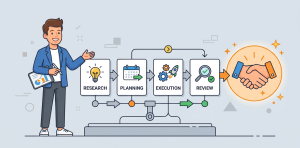
A scalable audit workflow gives every lead a useful first experience without promising a full consulting engagement before qualification. It should help us spot patterns quickly, identify high-impact opportunities, and move the conversation toward a clear next step.
Stage One: Create a Fast, Consistent Baseline
Start with a standard intake that captures the domain, core services, target market, priority locations, key competitors, and business goal. Then gather the recurring technical, content, and visibility signals in the same format every time.
The output should answer a few practical questions: What is broken? What is unclear? What is missing? What is most likely to matter commercially? If we cannot answer those questions without a 60-page deck, the process needs simplification.
Stage Two: Prioritize by Impact, Not by Issue Count
A prospect does not need 80 observations on a first call. They need a short list of credible priorities, such as weak service-page intent, missing internal links, unclear positioning, indexation problems, or absent proof points.
We recommend using a simple impact model:
- High impact: Blocks discovery, conversions, or platform understanding.
- Medium impact: Limits relevance, trust, or content depth.
- Lower impact: Improves polish but should not distract from major fixes.
This gives every recommendation a reason to exist. It also prevents the common manual-audit mistake of treating every issue as equally urgent.
Stage Three: Match Audit Depth to Opportunity
Not every lead needs the same level of analysis. A free or lightweight review can establish credibility and reveal obvious constraints. A qualified prospect with budget, urgency, and a clear business case can then receive a deeper strategic audit.
For agencies that want this front end to feel like their own, Marvlus agency tools support branded audit experiences and shareable reports. The practical benefit is a more consistent prospect experience, while our team keeps ownership of the strategy and relationship.
Questions Agency Owners Ask
Agencies usually have the same concerns when they move away from fully manual audit production. The answers depend on the level of client complexity, but the core principles remain stable.
Will a faster audit feel less valuable to prospects?
No, not if it is focused and specific. Prospects value relevant insights, clear priorities, and a credible explanation of business impact more than a thick document full of low-priority observations.
Should we charge for an initial audit?
Yes, when the work requires deep analysis, stakeholder interviews, competitor review, and a strategic roadmap. A lightweight assessment can qualify the opportunity, while a paid diagnostic protects senior time and signals commitment.
How often should client audits be refreshed?
Most active engagements benefit from a recurring review every quarter, with lighter checks during monthly reporting. Sites going through redesigns, migrations, content expansion, or major technical changes may need more frequent review.
Can a small agency use automation without losing its personal touch?
Yes. Personal service comes from relevance, judgment, communication, and follow-through, not from copying data into a slide deck. Automation should handle repeatable setup so we can have better client conversations.
What should stay manual in an SEO audit?
Business context, prioritization, competitive positioning, recommendations, and final quality control should remain human-led. Those are the areas where experience prevents a technically correct but commercially weak recommendation.
Is a white-label audit better than sending tool screenshots?
Usually, yes. A branded report keeps the client focused on our agency’s diagnosis and next steps instead of the software behind the data. It also creates a more cohesive experience across sales, onboarding, and ongoing account management.
Build Capacity Without Lowering the Bar
Manual audits are valuable when they are used deliberately for the work that needs deep expertise. They become a problem when our best people spend most of their time compiling data, rebuilding familiar documents, and chasing consistency across accounts.
The strongest agency workflow combines a repeatable baseline with thoughtful human review. That gives us faster responses, clearer recommendations, healthier margins, and more time to do the strategic work that earns client trust.
Turn More Website Visits Into Useful Sales Conversations
If audit production is slowing your team down, start with a branded assessment that gives prospects a clear first look at their opportunities. Explore Marvlus to create a more consistent audit experience, collect qualified leads, and keep your agency focused on the strategic work clients hire you to do.