White Label Marketing Reporting Tools for Growing Agencies
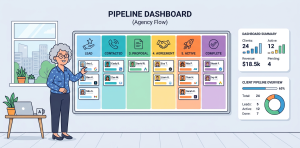
Clients rarely leave because a chart was missing. They leave when they can’t see what the work is achieving, what changed, or what happens next. That’s why white label marketing reporting tools are more than a convenience for agencies, they are a client-retention system.
For SEO, AEO, GEO, and full-service marketing agencies, the right platform turns disconnected data into a branded story. Instead of spending the first week of every month assembling screenshots, we can spend that time explaining outcomes, identifying risks, and recommending the next best move.
What A White Label Reporting Tool Should Actually Do
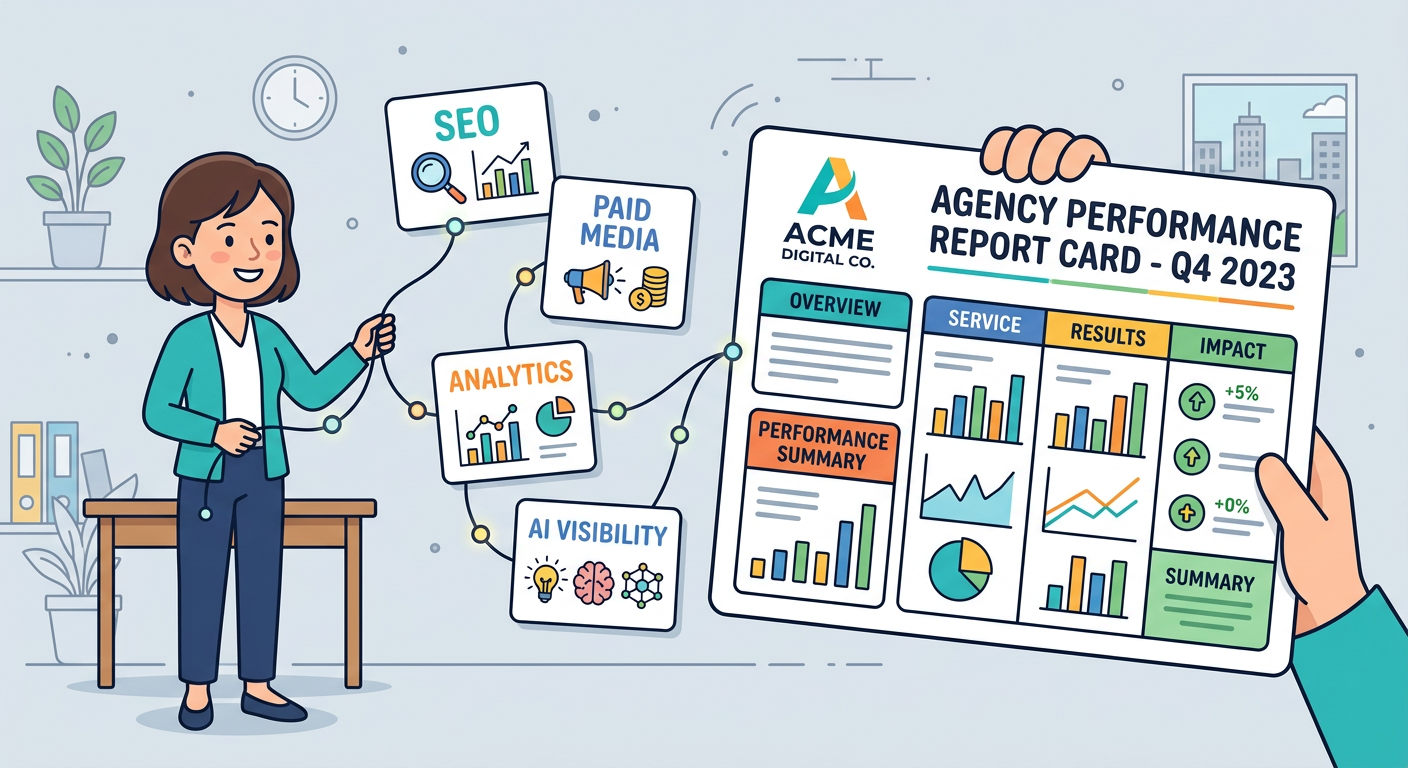
A strong reporting platform collects performance data, presents it under our brand, and automates repeatable client communication. The best tools do not simply make dashboards prettier. They reduce reporting labor while helping clients understand the value behind rankings, leads, conversions, visibility, and campaign decisions.
The operational pressure is real. In the 2025 Basis Advertising Agency Report, 56.1% of agency professionals named inefficient processes as a major challenge, while 42.1% pointed to siloed or disconnected systems. Reporting is often where both problems show up first.
| Tool | Best Fit | Pricing Model | Notable Strength |
|---|---|---|---|
| AgencyAnalytics | Multi-client agencies | Per client | Broad integrations |
| DashThis | Simple recurring reports | Per dashboard | Fast template setup |
| Swydo | Cost-conscious agencies | Per data source | Unlimited clients |
| Looker Studio | Custom reporting teams | Free software | Flexible dashboards |
| Marvlus | SEO and AI visibility agencies | Agency platform | White-label audits and reports |
The Features That Matter More Than Fancy Charts
The right platform should make client reporting clearer and easier to maintain. Before comparing templates or visual styles, we should confirm that the tool supports the workflow clients actually need.
Reliable Data Connections
A report is only as credible as its underlying data. Look for native connections to the channels your agency manages, such as Google Analytics, Search Console, Google Ads, Meta Ads, LinkedIn Ads, CRM data, call tracking, and rank tracking.
For SEO and AEO work, reporting should also include keyword movement, organic clicks, page-level performance, technical priorities, and AI visibility where possible. If a connection requires a manual export every month, it will eventually become a reporting failure point.
Real White-Label Control
White-labeling means more than adding a logo. Clients should see our domain, colors, email sender, report cover, and portal experience. That consistency reinforces our agency’s expertise and prevents another software brand from sitting between us and the client relationship.
AgencyAnalytics offers custom branding, a custom domain, client portals, and automated reports as part of its platform. Its published pricing is $20 per client per month when billed annually, with unlimited data sources, reports, dashboards, staff users, and client users. Review its current plan details before modeling agency-wide costs.
Automated Delivery With Human Commentary
Automation should deliver the report, not replace account management. We recommend scheduling the recurring dashboard or PDF, then adding a brief human-reviewed summary that answers three questions:
- What improved?
- What needs attention?
- What are we doing next?
AI-written summaries can speed up first drafts, but they still need a strategist who understands the client’s sales cycle, market conditions, and business goals. A client does not need ten observations about a 3% click-through-rate change. They need an explanation of what matters.
Metrics That Connect To Business Outcomes
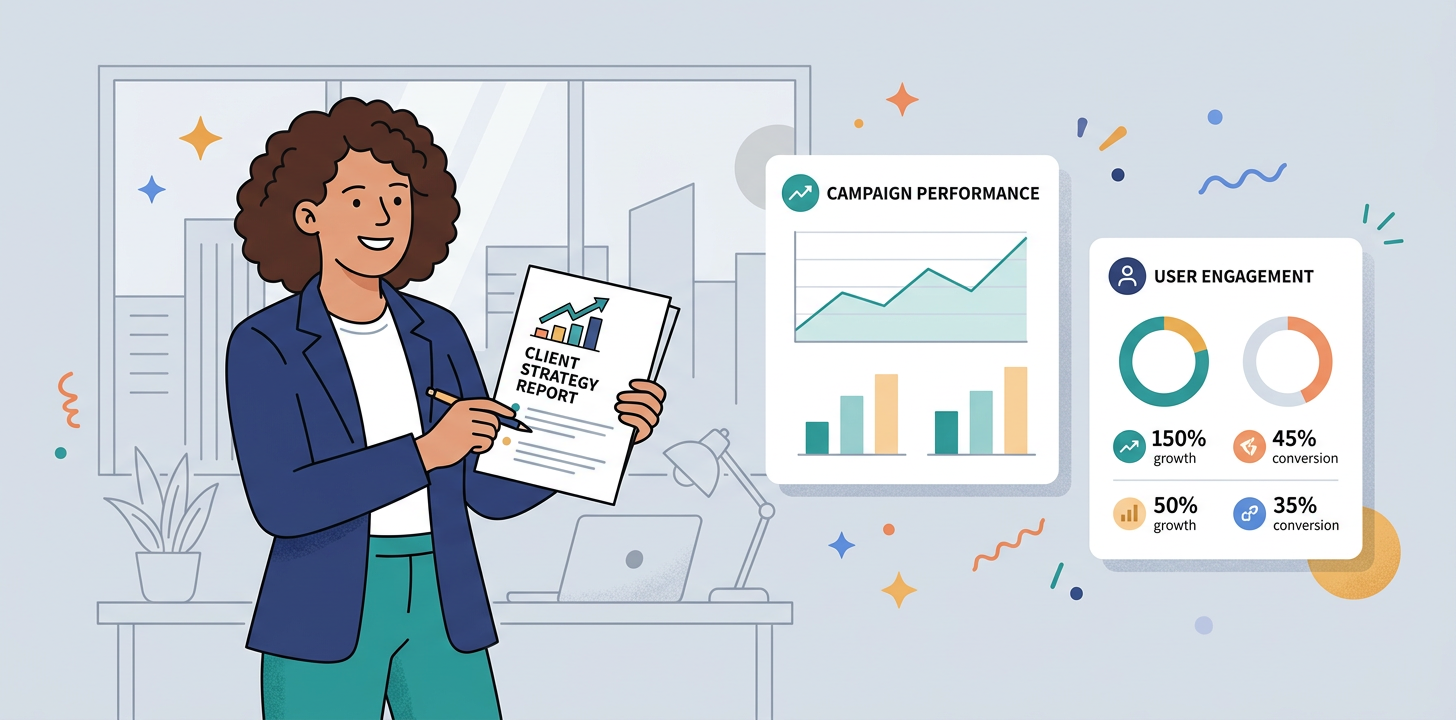
Impressions and followers can help tell the story, but they should rarely lead it. Start every client template with the metric closest to revenue or the agreed engagement goal, then work backward into the channels and actions that influenced it.
For example, an SEO client’s executive page may lead with qualified organic leads, non-branded clicks, and sales-qualified pipeline. A GEO client may lead with tracked AI mentions, relevant prompt visibility, referral traffic, and conversion activity from AI-driven visits.
Choosing The Right Tool For Your Agency Stage
Growing agencies should choose a platform based on their delivery model, not a generic feature checklist. The most expensive platform is not always the best one, especially if it creates more setup work than it removes.
Early-Stage Agencies: Standardize Before You Scale
In the early stage, our priority is consistency. Build one core template for each service line, such as SEO, paid media, local search, or AI visibility. Limit each report to the KPIs clients can act on, and avoid creating a custom dashboard for every account unless pricing supports it.
DashThis is a practical option when we need polished, recurring reports without a steep learning curve. Its published annual-billing plans begin at $44 per month for three dashboards and $139 per month for ten dashboards. The platform includes white-labeled dashboards, custom themes, and custom-domain options. Compare DashThis plans against the number of reports you expect to maintain.
Swydo can suit agencies with many clients but a controlled number of data sources. Its published plan includes unlimited clients, users, dashboards, and reports, while pricing is based on connected sources. Check Swydo’s source-based pricing before committing, because connector count can become the deciding cost variable.
Established Agencies: Consolidate Data And Create Visibility
Once we manage multiple service lines and larger client rosters, disconnected dashboards can become their own operational problem. This is the stage to prioritize broad integrations, client portals, approval workflows, roll-up reporting, and dependable support.
AgencyAnalytics is a strong fit when we need a broad marketing reporting hub, especially across SEO, PPC, social, and ecommerce clients. For teams with highly custom data models or analyst capacity, Looker Studio can offer more design freedom, but we should budget for the maintenance work and connector setup that comes with it.
AI Search Agencies: Report On More Than Rankings
AEO and GEO services need a reporting model that explains an emerging channel without overstating certainty. We should track traditional SEO signals alongside prompt coverage, brand mentions, citation patterns, competitor appearances, content improvements, and referral behavior from AI platforms when analytics makes that visible.
This is where a white-label AI and SEO audit workflow can add useful context before the monthly report. It gives prospects and clients a branded diagnostic view, then creates a more concrete bridge between a visible issue and the work we recommend.
Build A Reporting System That Clients Will Read
The best white label marketing reporting tools support a reporting system, but they cannot design the system for us. A clean monthly cadence gives every client the same confident experience while leaving room for strategic nuance.
Use A Three-Layer Report Structure
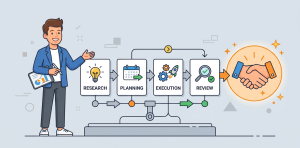
We recommend organizing every report into three layers:
- Executive snapshot: Three to five outcome-focused KPIs, a short performance summary, and the top priority for the next period.
- Channel evidence: Search, paid media, social, email, or local performance, presented only where it supports the executive story.
- Actions and owners: What we completed, what we learned, and the specific actions planned next.
This approach prevents reports from becoming data dumps. It also makes renewal conversations easier because we have a documented sequence of work, learning, and progress.
Turn Reports Into A Sales Asset
Reporting should start before a prospect becomes a client. A free diagnostic or audit reveals pain points, captures intent, and gives sales conversations a foundation in the prospect’s own data.
For example, we can combine a branded audit with agency-friendly keyword tracking to show both the current visibility gap and the future measurement framework. Pair that with keyword research reports built for client discussions when the prospect needs a clear content or demand-generation roadmap.
Review The Template Every Quarter
Client expectations change as services mature. Every quarter, review which sections get discussed in calls, which KPIs influence decisions, and which pages are never opened. Remove the clutter, sharpen the narrative, and add new measurements only when they help a client make a better decision.
Common Reporting Mistakes To Avoid
Most reporting problems come from unclear decisions, not weak software. Avoiding a few predictable mistakes will make any platform more valuable.
Reporting Every Metric Available
A report with 80 widgets does not prove thoroughness. It makes it harder for a client to find the metrics that matter. We should include a metric only if it reveals progress, explains a change, or influences an upcoming decision.
Hiding Bad News
Clients can handle a difficult month when we explain the cause and response. A trustworthy report clearly identifies what slipped, why it likely happened, what we are validating, and how we will respond.
Treating Automation As Strategy
Automated reports provide consistency, but they do not create insight. We still need a person to connect market movement, campaign decisions, seasonality, website changes, and lead quality.
Forgetting The Client’s Point Of View
A marketing manager and a business owner may need different reports from the same data. Give operators enough detail to collaborate, while giving executives an outcome-led summary they can understand in minutes.
Frequently Asked Questions
How much should an agency charge for white-label reporting?
We should usually include standard reporting in the service fee rather than pricing it as a separate line item. If a client requires custom attribution, executive presentations, advanced data blending, or frequent ad hoc analysis, a separate analytics or reporting retainer is reasonable.
Is Looker Studio a white-label reporting tool?
Not fully on its own. Looker Studio is flexible and free to use, but agencies often need additional connectors, dashboard maintenance, and branded delivery processes to create a polished white-label experience.
Can AI write client reporting summaries safely?
Yes, as a draft assistant, not as the final reviewer. We should validate every metric, remove generic language, and add business context before the client sees the summary.
How often should we send marketing reports to clients?
Monthly reporting works for most retainers because it balances useful trend data with a sustainable workflow. Weekly dashboards can help fast-moving paid campaigns, while quarterly reviews are ideal for larger strategic decisions.
What is the difference between a dashboard and a client report?
A dashboard is a live view of selected data, while a report explains what the data means over a defined period. Clients benefit most when they have access to both, with the report providing interpretation and next steps.
Do AEO and GEO clients need different reporting than SEO clients?
They need an expanded reporting model, not a completely separate one. We should retain core SEO metrics while adding AI visibility indicators, prompt tracking, citation opportunities, content clarity, and brand-mention progress.
Build Reporting That Proves The Work
If repetitive reporting is eating into the time we should spend improving client results, it is time to rethink the process. Marvlus helps agencies provide white-label AI and SEO audits, capture qualified leads, and share branded visibility insights without rebuilding a slide deck every month.
Start with the client journey you want to deliver, then choose the reporting workflow that supports it. A more useful report can strengthen sales conversations, increase trust, and give every client a clearer reason to continue working with us.
A Better Report Creates A Better Agency Relationship
White label marketing reporting tools work best when they help us make performance understandable, not merely visible. The right choice depends on how we price, what channels we manage, how much customization clients need, and whether the workflow leaves room for real strategic thinking.
Start simple, standardize the essentials, and protect time for interpretation. When every report tells a clear story about results, risks, and next actions, clients see an agency that is organized, transparent, and worth keeping.